The apostle Paul told the Ephesian elders that he had not shrunk back from declaring to them all the counsel of God (Acts 20:27). He told Timothy, who was pastoring the church in Ephesus, that “all Scripture is given by inspiration of God, and is profitable for doctrine, for reproof for correction, for instruction in righteousness…” (2nd Timothy 3:16). When Jesus was tempted by Satan in the wilderness, He quoted Deuteronomy 8:3 to Satan and told him “it is written, man shall not live by bread alone, but by every word that proceedeth out of the mouth of God” (Matthew 4:4). There are a multitude of verses throughout the Bible expressing the value and necessity of the Word of God in a believer’s life; to reference each one in this article would turn it into a dissertation in practical sanctification.
I’ve often wondered “how many believers actually have heard all the counsel of God?” Some older believers have undoubtedly heard all the counsel of God, but I would venture a pretty experienced pastoral guess that many, if not most Christians have never been all the way through the Bible, either on their own or in church. Why is this? I think there are 3 primary reasons that a professing Christian could go through life and never know all the counsel of God.
First, some preachers do not preach expositionally. This article is not intended to be a full explanation of expositional preaching, but expositional preaching is systematic, verse by verse, explanation and application of the various books of the Bible. Many pastors and denominations do not use this method of preaching. It would be nearly impossible to preach all the counsel of God using as a primary method any other form of preaching than exposition.
When I think of Paul’s phrase in Acts 20:27, the words that he used indicate that he had been assertive to deliver the entire message of God’s purpose and will to them. Generally, Paul’s statement here is recognized as a precedent for systematic and comprehensive preaching/teaching. It would be difficult to declare all the counsel of God by any other way.
As I think about the ministry of preaching and teaching to which God has called me, the systematic and comprehensive proclamation of all of God’s Word is a lifelong ministry task. I have preached an overview of every book of the Bible and I have preached verse by verse through at least 25 books of the Bible (of 66) in a little more than 20 years of pastoral ministry; this type of preaching has typically been 3 times a week. If the Lord gives me another 20 or 25 years of ministry, it could take that much time to preach/teach substantively through all the counsel of God.
Expecting to preach all the counsel of God without using a systematic approach is about the same as trying to paint the exterior of a house with 2 inch brush while blindfolded and expecting to cover everything.
Secondly, lack of faithful attendance to church in which the Bible is preached will deprive many of the opportunity to hear all the counsel of God. Even with many churches now making their services available through either livestream or recordings, the digital statistics are quite clear that the numbers of those who are missing services are not watching them online. Digital technicians have a pretty accurate number of how many people are listening or watching, and the number is not anywhere near those who are not there. In a decades long ministry at a church, I’ll only have enough time to preach verse by verse through a particular book once. Furthermore, only one third of the messages I preach are going to be on Sunday morning; two thirds of the messages I preach to declare all the counsel of God are preached on either Sunday or Wednesday night. Even if someone attended every Sunday morning service, they are still not hearing all the counsel of God. Most believers go through life and never hear a full explanation and application of many parts of the life of Christ, or the epistles, or the Psalms, or the prophets, or the book the Revelation! Such a lack leaves one only partially prepared for spiritual battles, only partially equipped for ministry, only partially partaking of the things provided for life and godliness.
Thirdly, most Christians have never read through their Bible. The Ponce Foundation recently did a study that concluded that only 30% of Christians claim to have read through the Bible! Believers should not depend solely on their pastor to feed them spiritually. The ubiquity of the Bible, both printed and digital, has removed any excuse for a believer’s neglect of God’s Word. Depending on listening speed, the average time of listening through the Bible is between 35 and 70 hours. I recently calculated that I spend about 8 hours in a year sitting at one particular stoplight in my area. I spend about an hour a day in my car alone, my calculations are that I could listen to the Bible 7 times through in a given year, just in my car (depending on listening speed).
Several years ago, I read my Bible out-loud to myself in 8 weeks, by reading 2 and 1/2 hours a day. While that kind of time commitment may seem impossible for most people, the average American watches around 3 hours of television a day.
Many, if not most, professing Christians never hear or read all the counsel of God. It may be that their pastor is not preaching and teaching systematically through the Bible, it may be that they do not faithfully attend services in order to hear all the counsel of God declared, or it may be that they never read through the Bible themselves. There is not an excuse for this neglect of God’s Word.
I understand that practically there may be small gaps in someone’s Biblical diet, but it ought to be the painful exception, not the standard. If there is a gap in your Bible intake, let me challenge you to ask the Spirit of God why that is, and then ask Him to motivate you by the grace of God to “live by every word that proceedeth out of the mouth of God!” To live by every word of God, you need to hear or read all the Words of God!
I hope that you are one of the 30% that has read through your Bible; I hope that you are one who faithfully hears the declaration of God’s Word from the pulpit in your local church. The Word of God is living and life-giving! It is powerful and transformative! It is the wisdom for life as the mind of God on every subject! It extends God’s grace through His Spirit! You need it! Don’t neglect it!
I have mostly avoided political commentary in my writings for the last 7 or 8 years.
In a practical sense, I realized the futility of dealing with people’s logic (or lack thereof) after I wrote an article expressing concerns about Donald Trump in a couple of articles in 2016. Amazingly, I was presumed to be and accused of doing all I could to see Hillary Clinton elected to the presidency (this is the logical fallacy of bifurcation, which is presuming that there are only 2 choices).
What has impacted my thinking and alleviated political concern even more – in a spiritual sense, was the death of of my sister-in-law. As a result of watching her approach and enter eternity at the young age of 42 coupled with my own growth in the understanding of Scripture, the reality of my ultimate citizenship in heaven occupies my thinking much more than my earthly citizenship (though I’m still profoundly grateful to be a citizen of the United States of America).
I still vote about 4 times every 4 years, between primaries and general elections. However, I pray for the president, vice president, cabinet, congress, military, and my state leaders – almost every day. Praying for human government certainly provides me more peace than whoever does or may occupy the seats of government. The Scripture is clear that praying leads to internal peace (Philippians 4:6-7).
Personally, I have a certain set of criteria by which I evaluate the person or party for which I will vote. Categorized, these are in order: 1) Biblical/Spiritual/Moral issues, 2) Freedom/Liberty/Constitutional issues, 3) Economical/Practical/Personal issues. Admittedly, these will vary and are going to be interpreted differently by each individual.
I am not a Christian nationalist, yet I still love America as my previous article explains. https://levideatrick.com/2013/03/10/why-i-love-america-and-what-i-love-more/. I’m bothered by nominal Christians who show more devotion to the United States than to the Kingdom of Christ, to a president or candidate more than to the King of Kings, to a political party more than to their local church, and to the U.S. founding documents more than to the Bible.
However, we still live on this earth and in this country and we are Biblically expected to seek to influence it by prayer, preaching the gospel, and participation. As it relates to that participation, one of the vexing questions for Christians has always been, “do you vote for a person who has major moral/character flaws?” This leads to the title of this article “Supporting … Nebuchadnezzar?”
Nebuchadnezzar was the king which conquered Judah. The first deportation of Jews to Babylon (including the prophet Daniel) was in 606 B.C. When Jehoiachin revolted, Nebuchadnezzar crushed it and deported a second group of Jews (including the prophet Ezekiel) in 597 B.C. Finally, in 586 B.C., Nebuchadnezzar completely destroyed Jerusalem and took a third group of Jews to Jerusalem. This is the Nebuchadnezzar who was so furious when his wise men could not tell him his dream or its meaning that he was ready to execute them all (Daniel chapter 2). This is the king who built a 90′ statue of himself and commanded his people to fall down and worship it. When the three Hebrew young men refused, he threw them into the furnace where they were miraculously preserved by God (Daniel chapter 3). This man, though having received an explicit and divine warning about his own pride, he still walked on the ramparts of his palace overlooking Babylon admiring the kingdom which he had built. He was stricken with lycanthropy (believing he was an animal) and wondered around in that insanity for 7 years before returning to his senses and acknowledging the God of heaven (Daniel chapter 4). He was a cruel conqueror, who killed the sons of Zedekiah before his eyes, and then put out Zedekiah’s eyes so that the last thing he ever saw was the execution of his own sons (2nd Kings 25). It is reported that 9 out of 10 bricks discovered by archeologists in Babylon have the name Nebuchadnezzar stamped on them. This man was characterized by anger, cruelty, and pride.
Yet, we have a fascinating instruction given to the exiled Jews from the prophet Jeremiah. The prophet Jeremiah never went into exile in Babylon (he did end up going to Egypt), but he did send a letter to the exiled Jewish captives there and he gave them the following inspired instruction “Thus saith the LORD of hosts, the God of Israel, unto all that are carried away captives, whom I have caused to be carried away from Jerusalem unto Babylon; build ye houses, and dwell in them; and plant gardens, and eat the fruit of them; take ye wives, and beget sons and daughters; and take wives for your sons, and give your daughters to husbands, that they may bear sons and daughters; that ye may be increased there, and not diminished. And seek the peace of the city whither I have caused you to be carried away captives, and pray unto the LORD for it: for in the peace thereof shall ye have peace.” (Jeremiah 29:4-7).
It was God’s design for His people, though in a foreign land because of their own wickedness, that they would still prosper in their existence until He brought them back to their own land. He told them to build houses and to plant gardens out of which they would live and eat. He told them to continue the normal customs of marriage and the replenishing of homes with more children so that when the 70 years of captivity were completed that they had not diminished as a people. He then told them to “seek the peace of the city” (Babylon) and also to “pray unto Jehovah for it.” This is the city were the prophet Daniel was captive, yet he rose in the ranks of government and served both Chaldean and Medo-Persian Kings. This is the city where Nebuchadnezzar reigned supreme! Get that, the exiled Hebrews were instructed to seek the peace (also meaning welfare) of Babylon. They were also instructed to intercede before God on behalf of Babylon. When Babylon prospered in peace, they would also be living in peace.
The king of Babylon, Nebuchadnezzar, was even called “my servant” by Jehovah in Jeremiah 25:9 and 27:6. Nebuchadnezzar was not being commended for his spiritual life here, but rather it was an acknowledgment that God was using Nebuchadnezzar as a tool to accomplish His divine purposes.
So what is the application of these thoughts?
First: people of genuine faith should acknowledge that we are pilgrims in this land. Our eternal home and citizenship is in heaven. Just like the people of Israel were inhabitants in Babylon for a period of time, so we are inhabitants of this earth and this country only for a screenshot of time in the overall design of God.
Second: we, in simile to the people of Israel in Babylon should seek the welfare of the place where we are existing as human citizens, especially by praying for that place. I give little weight to the political polemics of a so-called “believer” who gives no evidence of praying for their leaders as God has commanded. I was preaching in a church several years ago and asked the congregation if they prayed for their president (Biden); I wasn’t really expecting a verbal response but one man blurted out proudly, “No!” He was therefore publicly confessing (and without repentance) disobedience to the Bible.
Third: the Scripture is clear that human government is ordained of God and that He is ultimately the One Who sets human leaders in place. They are His servants ordained by Him. They are His tools used to accomplish his purpose. No matter what one may feel or think about the previous election, the election was not stolen from God. God was not watching election returns and wondering what was going to happen in the United States. No matter who “wins” the election this fall, God is still in control. If your preferred candidate loses, that was the will of God and ask yourself what it is that God wants you to learn; the same is true if your candidate wins.
Fourth: who it is that represents Nebuchadnezzar in your mind is a matter of individual soul liberty. Frankly, I can see any of the three candidates that are currently running for the presidency as being like Nebuchadnezzar in one or several ways each. Above, I delineated my list of issues which determine my vote. No candidate is going to fit those perfectly (he would be unelectable). And so I have to determine which person and party is going to best support my belief system as calibrated to the Bible. I have to determine which candidate is most likely to accomplish the “peace” or “welfare” of this country in which I and my family are pilgrims. Choosing your Nebuchadnezzar does not necessarily mean that you think he is an ideal man (I doubt that many of the Hebrew people in Babylon thought much of Nebuchadnezzar). You have to be guided by your conscience. There have been times when a relative or a friend has told me the person, proposition or party for which they were voting and it simply baffled my brain. But, it is their right and their prerogative – I hope they were doing it with a Biblically calibrated conscience. I’ve also talked with people that I know have wrestled Biblically and logically through some kind of an issue and have come down on a different side than I have; in their mind they are following the instruction of God as closely as possible.
The voting philosophies of people are often logically confusing. I’ve known people who have attempted to separate politics and morality. I’ve known some who have voted for a particular party because that has been the family tradition for generations. I’ve known people who simply don’t vote. I knew a man years ago who explained his conundrum to me that “for my job, I’m better off voting for … but, as a Christian I know I should vote for…” I’ve known people that have switched parties during primaries in order to vote for (or against) another person. I’ve heard the assertion that “voting for a 3rd party is the same as voting for or against the other candidate.” Bullying and intimidation are rampant in heated elections; if you think this is something new then you haven’t read much history. Read of some of the pamphlets that were written of Adams and Jefferson, read of men burned in effigy, read of a divided nation over the election of Lincoln, read of Tammany Hall in New York, read of the Pendergast machine in Kansas City that launched Truman into politics; I could go on ad nauseam.
Here’s the conclusion, you must vote your principles and your conscience. Paul made it clear in 1st Corinthians 8-10 that some people’s conscience will permit one thing while another’s conscience will not. It is the beauty of liberty.
Filed under: Uncategorized | Comments Off on Supporting … Nebuchadnezzar?
My normal pattern of preaching and teaching is to go through a book of the Bible, verse by verse. For me, special days, like Mother’s Day, create a little bit of anxiety as I step out of my normal pattern to try to develop a message on a theme or topic in light of that day. I decided this year that I would allow the Lord to lead in my own daily Bible reading and use whatever passage of Scripture was before me the week before a special day. Last week I was reading the book of Job and so Job’s wife was the mother that was before me as I was preparing to preach for this past Sunday.
Job is one of my favorite books of the Bible; in fact, we gave the name of Job to our youngest son as his middle name. The book of Job became very personal and special to me in the fall of 2003. I had moved from the church where I was an assistant pastor to go back to school for an MA Degree. Our finances were tighter than they had ever been in our marriage, our second son was born early and had physical issues which caused us much concern and anxiety. During that first semester back in school, I took a graduate class with Dr. Surrett on the book of Job (my MA was in O.T. studies). That class was more than an academic step for me, it was nourishment for my soul at that very difficult time in our lives.
Job’s wife has been maligned mercilessly for millennia. In fact, after I preached about her yesterday for Mother’s Day, this morning I had a Facebook video show up on my feed that showed a comedian mocking the kind of wife that she was (it’s almost like Facebook can hear me preach). However, I believe she deserves another look. A second look at the life of Job’s wife might not only deliver her from infamy, but it may also help us to be more understanding and tolerant of some of the struggles that those around us may be enduring. Solomon warned in Proverbs 18:32 that “He that answereth a matter before he heareth it, it is folly and shame unto him.” I wonder how often Job’s wife has been judged by people who haven’t given thought to the whole matter?
In the first 2 chapters of the book, the inspired narrative tells us the story of how God allowed Satan to afflict Job so that his integrity and faith would be revealed. Chapter 1 reveals that Job (and his wife) had 7 seven sons and 3 daughters; 7,000 sheep, 3,000 camels, 500 yoke of oxen, 500 she asses, and a very great household. He was the greatest of the men of the east. Satan was permitted to take all of this away – in a single day. The Sabeans came and stole the oxen and asses and killed all the servants except for the messenger. The sheep were consumed by a lightning storm along with the servants, save the messenger. The Chaldeans stole the camels and killed all the servants but the messenger. The most devastating news of all was last, a great wind destroyed the house where his children were together and killed all 10 at once. Job’s response is immortal, “the LORD gave, and the LORD hath taken away; blessed be the name of the LORD.”
The next chapter, Satan was still not satisfied that Job’s faith and integrity were real and was permitted to touch Job’s health and therefore afflicted him with boils that covered his body. His misery was such that he sat on the outskirts of the city and scraped his sores with broken pottery. Yet, he maintained his integrity.
Job’s wife came to him and spoke to him, “Dost thou still retain thine integrity? Curse God, and die.” Those are the only words that we have a record of her speaking in history. She has been judged severely by them. I do not justify her words (though I think they are likely misunderstood). Job did not justify her. In fact, he offered a rebuttal to her, though we have no way of discerning his tone and demeanor as he responded, “Thou speakest as one of the foolish women speaketh. What? Shall we receive good at the hand of God, and shall we not receive evil?” He identified her unspiritual response when he said that she spoke as a foolish woman (the word “as” must not be overlooked; it was a comparison, not a reality of who she was). He then defended God before his wife. Job’s words could have been spoken harshly and in rebuke. The reality is that they could have also been, and I believe were, spoken in compassion! She had just lost 10 children! When Job was speaking to his friends a little later, he told them “miserable comforters are ye all” and then told them that if he was in their place he “would strengthen you with my mouth, and the moving of my lips should asswage your grief.” Why would this offer of comfort not have been extended to his wife?
Again, I do not, God did not, and Job did not justify his wife. She did not respond in faith. It was possible for her to have done so; her husband had lost everything that she had and he had responded in faith, so she could have as well. She had a wrong view of God. Job recognized that she thought that God should only give good (her perception of good, that is). The reality is, sometimes what we perceive as bad through human eyes, God will use for our good in His eyes. She gave bad advice to her husband. Her idea was that he should take his leave of God on this earth and let death come. The word “curse” is the same Hebrew root word for “bless.” However, the context was obviously different; the idea is that when one was taking their leave or departing they would offer a departing salutation. I’ll mention more of this a little further down. Job’s wife’s response was not in faith, but I’m convinced she wasn’t what many have made her out to be.
She has been severely misunderstood, and therefore unjustly maligned. Let me explain.
If Job was the same kind of husband that he was father, his discipleship of his wife had been thorough. Chapter 1 records that Job had dedicated his children to the LORD and that he was continually offering sacrifices on their behalf before Him. When his friends started to speak after 7 days of grieving with him, one of the very first things that Eliphaz the Temanite acknowledged of him was that “thou has instructed many.” It would have been out of character for a man such as Job to have devoted so much time to the spiritual well-being of his children and ignored his wife. In chapter 31 Job made it clear that he had been faithful in his marriage. This couple was ideal! I’m absolutely positive that the response of Job’s wife in 2:9 was completely out of character for her!
How have we misunderstood this mother?
We don’t understand her pain. It is easy to judge her based on her advice to her husband. But consider this poor woman. She was a pawn in Satan’s attack against her husband. She didn’t know of the conversation going on in heaven between God and Satan. She didn’t know that it was her husband’s faith and integrity that was being tried. But she had just lost 10 children! I can’t bear the thought of losing 1 of my 8! But all of them, at one time! I admire the strength of the woman to even be able to speak to her husband. But not just her children. Their wealth was gone. Their status was completely reversed; her husband’s friends now looked on him in pity and blame. Her husband was in physical misery. Her theological expectation had been completely upended and unfulfilled. She was certainly confused; she knew her husband’s integrity more than anyone, yet here he was apparently under the curse of God. This would seem to be more than a mortal could bear, yet her husband did. There is no way we can understand her pain.
We don’t understand her temptation. I wonder why Satan did not kill her with the children? I wonder why Satan didn’t afflict her with the same sickness as her husband? The only thing which God had restricted from Satan was Job’s life. I think that Satan (though the Scripture doesn’t record this) anticipated and hoped that Job’s wife would be a tool to cause him to forsake his faith and integrity. What were the influences that Satan was exerting on her to get her to be a stumbling block to Job?
Furthermore, her suggestion to Job was an escapist solution. I’ll also address this in a little more detail in a moment, but in her mind, Job would find relief if he could die. Job himself acknowledged that he longed for death in chapter 3 and chapter 6. The principle has been asserted many times that we should “look for grace to go through the trial, not for rescue from the trial.” It is in our trials that the grace of God is manifested on our behalf.
We don’t understand her faith. You might remember that I stated above that “she didn’t respond in faith.” There is a difference in not possessing faith and not responding in faith. Sadly there are many times that believers have not responded in faith in a trial. As I wrote above, I’m convinced that she was a person of faith and that her response was out of character for her. Even so, 21st Century New Testament believers live in an entirely different context than she did.
Think carefully on these things, she did not possess a Bible! She did not have the written Word of God to comfort her. She didn’t have Psalm 23, she didn’t have Philippians 4:6-7, she didn’t have James 1:2-8, she didn’t have 1st Peter 5:7-9 or countless other passages of Scripture which we habitually run to when we are in trials!
She did not have the indwelling Spirit of God. Theologically, we recognize that the Holy Spirit of God came upon people of faith in the O.T. for times of empowerment and need, but it wasn’t until the N.T. at Pentecost that the Holy Spirit of God began to indwell believers. Remember that Jesus had promised the disciples that after His ascension back to heaven that the Father would send the Comforter to be with them forever. If you are a believer who has learned the submission of being filled with the Spirit and walking in the Spirit, you know what it is like to have His empowerment and comfort. She didn’t have the indwelling Spirit of God at her point in history.
Her theology was developed by creation, conscience, experience, and limited special revelation. I have the completed canon of 66 books of the Bible to reveal the nature, the attributes, the works, and the design of God. Other than the general revelation of God in creation and conscience (Psalm 19:1-6; Acts 17:22-31; Romans 1:19-20; Romans 2:14), the ancient understanding of God was passed down by those who had experienced interaction with Him. Job acknowledged at the end of the book, 42:5, that to that point in his life even he had only heard things about God. I have a complete Bible. I have thousands of books written by men who have been studying God’s revelation of Himself for thousands of years, she (nor Job) had any of that.
However, she most likely believed in a resurrection! How Job knew what he knew of God, we don’t know. But Job most definitely believed in a resurrection and eternal life. Some of the most well known verses from the book of Job are found in 19:25-27, which I’ll put in writing here because of their importance to this thesis. Job, in the midst of his grief said, “For I know that my redeemer liveth, and that he shall stand at the latter day upon the earth: and though after my skin worms destroy this body, yet in my flesh shall I see God; Whom I shall see for myself, and mine eyes shall behold, and not another; though my reins be consumed within me.” To be concise, Job acknowledged “after I’m dead and worms have eaten this body, yet in my flesh I’ll see God.” I don’t know how he knew that or how it was revealed to him, but he believed it. Now, going back to my previous assertion that “If Job was the same kind of husband that he was father, his discipleship of his wife had been thorough.” I’m convinced that Job had communicated his belief in the resurrection to his wife. That belief would have made the loss of her children far easier to bear, as Paul told the Thessalonians believers several thousand years later in Biblical history, “ye sorrow not, even as those which have no hope.” This belief would also help us to understand her advice to Job in 2:9, “curse God, and die.” Obviously she had an escapist mentality, but the idea could be interpreted as “Job, bid God farewell in this life and die!” Job recognized that this was a foolish thought coming from her and so he would not accept it. However, her motive was not much different than many Christians facing difficult circumstances, “God, do whatever is necessary to get me out of this situation!”
There are some lessons which can be learned from Job’s wife.
Circumstances do not justify a sinful response.
Our judgment should be tempered by sympathy and the knowledge of our own finite understanding.
We don’t know what God is doing behind the scenes, yet we still should trust Him. The Scripture does not record for us that Job and his wife knew of the conversations between God and Satan.
P.S. God restored and doubled everything to Job in chapter 42. However, God only gave them 10 children the second time, not 20. Yet in eternity, because of the resurrection, Job and his wife have 20 children. People have questioned if Job’s wife from chapter 2 was the mother of the second group of 10 children? I believe she was. Nothing in the text indicates that she left Job, that she died, or that Job found another wife. That being the case, the blessing of God on her husband also came back upon her.
Filed under: Uncategorized | Comments Off on A Misunderstood Mother
You’ve probably heard someone say something like “Hollywood doesn’t know what real love is!” Or “some people think they have fallen in love, but they have really just fallen into lust.” I’ve heard people say “I just don’t love them anymore!” and others have said “you don’t fall out of love if it is genuine love.” These statements all reveal a partial understanding of multiple nuances of love.
I’ve been thinking on this much lately. Even after almost 25 years of marriage, I want to better understand marriage. I want to “dwell with her according to knowledge.” I want to be able to explain marital love to my children, and more than just the “facts of life” and “birds and the bees.”
I’m convinced that an understanding of the different nuances of love will help many marriages whether they are starting out, in mid-life, or even those that have hit the “growing old together” stage.
The Greek language (the original language of the New Testament) has three primary words for love between a man and a woman: eraoe, phileoe, and agapaoe. The first one is not used in the N.T., but it is used in several forms in the Septuagint (the Greek translation of the Hebrew Old Testament which Jesus and His apostles would have used and quoted). The second and the third words are normal New Testament ideas. Of all three of these words which I’m going to explain, please understand that I’m dealing more with root ideas which are manifested in multiple parts of speech in the Greek language. I’ll post them in the verb form, but in the text of Scripture, the root may be a noun, a verb, or a modifier.
Eraoe is the root word from which from which we get our word erotic. Typically this word is used in a negative sense in a conservative Christian context with the idea being that of lust (or desire in more positive context). Liddell & Scott’s Unabridged 1883 Greek Lexicon defines the word as “to love… properly of the sexual passion, to be in love with.” In Esther 2:17, the Septuagint uses this root to describe the King Ahasuerus’ love for Esther who he would choose to be his queen. The root word/idea is also used in the Septuagint in Ezekiel 16:33 to describe the inordinate relationship that Jerusalem had with foreign nations, symbolically illustrated as illicit lovers. Hosea 2:5 uses this concept to describe the unfaithful wife’s pursuit of her lovers. The reason for pointing out these references is not to show the negative context (of the latter 2 especially), but to show the physical aspect of this kind of love. For the King Ahasuerus, the emphasis seems to be on the physical attraction of Esther that drew him to her. For the other two, these were both inappropriate relationships outside of a marriage covenant. Bishop Trench’s classic Synonyms of the New Testament surmises that the absence of this root in the New Testament “is partially explained by the way that the world had corrupted their meanings. These words had become so associated with the idea of sensual passion and carried such an aura of unholiness about them that they were not used in Scripture.” This is a valid consideration. However, we must also remember that Hebrews 13:4 tells us that “marriage is honorable in all, and the bed undefiled.” 1st Corinthians 7:2-5 informs us of the physical companionship that Christian husbands and wives should have. The entire Song of Solomon, when interpreted literally, is a picture of physical love that exists in a God-ordained union. The Scriptures repeatedly use the phrase that a man “knew his wife” in reference to the physical relationship existing in a marriage. In the book of Proverbs, Solomon warns his son to reject physical love with a strange woman, but to embrace it with his wife. The Old Testament is full of illustrations of a normal, healthy, physical relationship between a husband and a wife. In the marriage context, erotic love is God-ordained and good.
Phileoe is the root word for affection and endearment. It is the idea of friendship. One of the clearest usages in the N.T. is in John chapter 11 when Mary and Martha sent word to Jesus to tell Him that Lazarus, the one who Jesus “loved” was sick. The same word is used in John 11:36 after Jesus wept at the tomb of Lazarus and the spectators acknowledged how much he “loved” him. In Luke 11:6 the word refers to the “friend” who has travelled and arrives needing food after a journey. In John 3:29 the idea is that of the best man at a wedding. As it relates to marriage, it is seen in Titus 3:5 in that the young wives are supposed to “love” their husbands. I consider this to be the most normal aspect of the marriage relationship. A typical husband and wife will spend time together at home, at the store, at restaurants, at church, with relatives, in the vehicle, at children’s activities. It is not uncommon for a spouse to say of their partner that “he/she is my best friend.” This is as it should be. Personally, there is no person with whom I’d rather spend time than Carol. She is the first person that I talk to when we wake up in the morning, she is the last person that I talk to as we go to bed at night. She is the person that I text more than anyone else. We frequently call each other through the day, sometimes to sync our schedules, sometimes to solve a problem or discuss an issue, sometimes for advice, and many times because I need encouragement and just want to hear her voice. When I come home at the end of the day, hers is the first voice I want to hear. Her slightly shy and mildly mischievous smile that has meaning for me that it holds for no one else – greets me multiple times through the day! She is my biggest supporter, motivator, and encourager. I talk to her about things that I do not discuss with anyone else. She and I share problems and successes. I like her. I want to be around her. I would choose her over anyone. Though this affection will sometimes lead to eraoe (physical) feelings and responses, it is a distinct love that occupies most of our time together. She is my best friend.
Agapaoe is the sacrificial and selfless part of love which was so clearly demonstrated by God through Christ in redeeming us from sin by His work on the cross. This word is used in John 3:16 when God “so loved the world…” This is the word used in John 13:34 in the new commandment that Jesus gave to us through His disciples that we love one another as He loved us.” People will know that we are His disciples when we have that kind of love for each other. It is the word used in John 17:23-26 to describe the love relationship between God the Father and God the Son and the relationship into which we have been invited! You might think “how is the love between the Father and Son sacrificial?” Their love is untainted by sin and selfishness. It is the word in Galatians 2:20 in which Paul says Christ loved him and gave himself for him. It is the word used repeatedly in 1st John to indicate the kind of relationship that Christians should have with each other if the love of God is really in them. As it relates to marriage, it is the command given to husbands in Ephesians 5:25-33 to love their wives as Christ loved the church. In Colossians 3:19, it is given as a command to husbands to love their wives and to be not bitter against them (the indication from that final instruction is that it is possible and sometimes happens that husbands are bitter against their wives). This kind of love is sacrificial; it is selfless love. This is love without an expectation of a return. This is the choice to love someone when they are at their most unloveable. This is the discipline to endure with and for someone even when the physical love and the friendship are not tangible. This is what makes a man love a wife who has been disfigured by accident or disease. This is what causes a spouse to endure in a marriage that has been corrupted by the sinfulness of the other. In a less radical sense, this is the reason a husband or wife will embrace the idiosyncrasies or the quirks of their spouse. This is what motivates a woman to love her husband as the Lord helps him overcome his temper. This is how a woman can be patient as her husband learns to make his family his priority. This is what causes a man to love his wife when she purchases something he thinks she shouldn’t have. This is what causes a man to love his wife when she isn’t ready on time or makes them late. This is what causes spouses to love each other when one or both are sick, or are aging and losing their youthful appearance. This is why spouses stay together through the trials of finances, health, children, vocation, etc. This love endures. Spiritually, this is the realization that a spouse’s responsibility is to use all of their energies to help perfect and prepare the other to stand before the Lord in eternity.
So what does this all mean? Marriage is not just made up of one kind of love. In fact, a normal marriage should have all three different aspects; physical, friendly, and sacrificial. It is likely that when a marriage fails, the different aspects of love have not been cultivated. I believe that when each of the three kinds of love is nurtured in a marriage, it will endure. At different stages in the marriage, each of the different nuances are going to be manifested. Each kind of love is important and even indispensable, but for the Christian, the love that makes it last is the sacrificial and selfless love which the Lord commanded in Ephesians 5. My wife is my lover, she is my best friend, and she is my sister in Christ and a joint heir of the grace of life. If you want a healthy marriage, you should work on all three!
Filed under: Uncategorized | Comments Off on Love, Love, or Love?
Our love story has some funny moments in it. But that humor also shows the depth of reality that exists in the word “love” between me and Carol.
Carol and I developed an interest in each other during the spring of 1997. The back story to our meeting is long and I’ll save for another time. However, our relationship had progressed to the point that I invited her to come to my home in northeast Missouri during our Christmas break from college in 1997. I was certain that she was the one to be my life’s partner and I was eager to take our relationship to the next step, though admittedly, I was nervous. I had never told any non-relative female that I loved her (I was 21 years old by this time). I believed that the word “love” was a special word not to be tossed around flippantly by teenagers.
One afternoon over Christmas break, she and I walked several times around a couple of blocks in my hometown. During that hour long walk, I kept wanting to tell her “I love you!” But I was nervous. What if that was too much for her? What if she said she wasn’t ready to go any further? She had already told me earlier that year that she wasn’t sure that we’d ever be more than friends. She had even tried to take a break from our relationship a few months earlier, but I just wasn’t interested in looking for anyone else and she consented to continue together for the time being. But, I wanted to tell her I loved her.
As she and I walked around, my heart kept telling me “tell her you love her, or you’ll always wish you would have!” I believe that God was prompting that thought in me (she later told me that she was thinking if I didn’t take it to the next level soon, that she was thinking it wasn’t going to go anywhere and was considering breaking it off permanently). Finally, through a bit of a play on words, she prompted me to tell her what was on my mind and heart and I looked at her, and barely able to breathe, I uttered those words, “Carol, I love you!” She looked at me with glowing eyes and the same smile that I saw as she walked down the aisle towards me a year and a half later, the same smile that makes my heart race when I see her walking towards me even today, and she said, “thank you.”
What a dichotomy of emotions! I had, for the first time in my life, uttered the words “I love you” to the young woman with whom I wanted to spend an eternity; in my mind I had given her myself and it was the thrill of a lifetime! But the emotional pendulum swung hard and fast when I realized her response was less than my offering. I still smiled, and we walked around the block several more times, and had a wonderful Christmas Holiday together. But there was tension in my mind and heart.
I kept telling her that I loved her. Through the holidays and into the next school semester. We saw each other every day. I left her notes telling her of my love (we didn’t have cell phones to send texts). I would tell her daily and before we would return to our separate dorms each night. But her response was always “thank you.” I wondered: why won’t she tell me? Is she not sure? Is she afraid? Is she waiting for some reason of which I’m unaware? But you can’t force something like that.
One day, she almost told me. She had a stressful situation before her and on her way to deal with it I told her, “I love you.” She turned to look at me and said “I lo….” and then her voice trailed off with out finishing the phrase and then gave me the familiar “thank you.” I was happy and disappointed all at once. I knew she was thinking it, I knew she wanted to say it, it was almost natural, but she still intentionally stopped herself from saying it. Uggh!
February arrived. We began planning to attend the college Valentine Banquet together. We would have a couple of dates a week, often just in the school snack shop reading or studying, but still together. Our favorite date night was always Friday evening. We had planned a date for Friday afternoon/evening (February 13th, 1998). I was rather stressed with some classes and responsibilities, as well as what I felt was unrequited love, or at least the vocal statement of love. I was so looking forward to that evening with her, when I found out that one of the guys in my dorm was sick and needed to be taken to urgent care. As the RA, that was my responsibility – and I must say, I was not real happy with this guy or the situation. I missed most of our date. When I returned to the school, my demeanor was not jovial, in fact I was complaining – probably better classified as pouting. Carol and I only had a few minutes of time left together and we went and sat on the stone bench against the big old tree that used to be in the center of the college courtyard. As we sat there and I complained, she just looked at me and said without any fanfare or prelude, “I love you, Levi.” I was speechless. My eyes watered. Later I asked her, “why then?” She told me “that’s when you needed to hear it.” She also wanted to do it on her terms, not just in response to my words. She had also never given the offering of those words to anyone else in a romantic context. She had determined long before that she would only say those words to the man she was going to marry. I received those words with all the joy and appreciation of which my heart was capable.
A few months passed. We often talked about marriage. We regularly said, “I love you to each other.” One day we were walking and I said pointedly, “are you certain that you want to marry me?” She looked at me incredulously. She is a deep person and there is a fire inside of her that is well controlled, but there was a glint of it in her eye when she looked at me and said with conviction, “I told you that I loved you!” Interpret that to mean, “I wouldn’t have told you I loved you if I wasn’t sure I wanted to marry you!” I almost felt like I needed to apologize for even asking that question! We did get married a year later and it will be 25 years this next anniversary in May.
Here are a few thoughts: 1) Her love was given to me, not in response, but as a decision. 2) Her love was a lifetime commitment; before we ever said “I do” at the marriage altar, we were already committed to each other for life. 3) Her love was a gift to me. It was a gift which I’ve sadly taken for granted too often, but when I meditate on it, I realize that her entire person has been dedicated to me and our relationship.
So for us, “I love you” is more than a phrase on hard candy hearts, valentine cards, or several different boyfriends or girlfriends. It was an honest vow that we were committing ourselves to each other for life. February 13, 1997 – 27 years ago, I heard those words “I love you” for the first time, from the same lips which have kissed mine now thousands of times, night and day.
I love you, Carol. Then. Now. Forever.
Filed under: Uncategorized | Comments Off on What Is Love?
This is partially a review of a few books. I know that I normally write brief reviews on Facebook for different books that I have finished. However, I have read several books in the last couple of years that I feel warrant a more in depth article than just a few words on a Facebook post.
I saw a video of a preacher years ago declaring from his pulpit that “it’ll be a cold day in hell before I learn theology from a woman.” Such an attitude is un-Biblical; I’m glad that Apollos didn’t have that demeanor (Acts 18:26). King Lemuel certainly learned much from his mother (Proverbs 31). Solomon exhorted his son to give heed to the “law of thy mother.” I’ve learned theology (or the application of it) from my grandmothers, from my mother, from my mother-in-law, from my wife, from my daughters, from Sunday School teachers, school teachers, and college teachers.
The following books have all been written by women. I don’t agree with everything in them and I’m not necessarily endorsing or recommending them. I am endorsing the idea that men can learn from a woman and should read books written by women. It is important for men to learn and respect the way that women think. Peter instructed Christian husbands regarding their wives to “dwell with them according to knowledge.” (I’ll give a fuller explanation of 1st Peter 3:7 a little later.) Peter’s inspired words teach that a husband is to co-habit or live with his wife with wisdom and an understanding mind. Even more so, learn the way his wife thinks (women are not all the same).
The books are these: 1) An Affair Of The Mind by Laurie Hall. 2) Gay Girl Good God by Jackie Hill Perry. 3) The Great Sex Rescue by Sheila Gregoire, Rebecca Lindebach, and Joanna Sawatsky. 4) The Woman They Wanted by Shannon Harris.
An Affair Of The Mind. This book expresses the struggles a wife endures when her husband is addicted to pornography. The book was published in 1996 and I don’t know anything about Laurie Hall now, or if her marriage ultimately survived. In the book, she details the emotional struggles that she endured: guilt, inadequacy, betrayal, anger, fear, indecision, etc. and et al. It would be good for young unmarried men and for married men to see the mental anguish that they would bring upon their wife with an affair of the mind. This book would not have been as effective if written by a man.
Gay Girl Good God. Jackie Hill Perry grew up in a nominally religious environment, but due to family situations became distrustful of men as an adolescent and so her affections were turned towards women as a teenager. She later trusted Christ and left her former life and eventually married a man and has children and ministry with him. Her perspective here helps to demonstrate the devastation and complication that is brought on girls/women when men are abusive. She also reveals that change is a journey and accomplished in grace.
The Great Sex Rescue. The women who wrote this book did not do so out of a crisis. They wrote it out of a desire to see husbands and wives enjoy intimacy in the way and with the freedom that God designed. Secular culture and conservative Christian culture have varying ideas of what sex is supposed to be. Normal men and women have different ideas of what sex is supposed to be. Christian men and women have different ideas of what sex is supposed to be. The value in this book for Christian men is that it is written by Christian women. Unfortunately, not every husband and wife are experts in communication and they may struggle with explaining their needs, fears, dislikes, etc. Sometimes communication is a struggle. Having a woman, who is a good communicator, explain the way women think and respond and feel can be a tremendous benefit to a man (who may not be a good listener).
The Woman They Wanted. This book is the one that motivated me to write this article. Shannon Harris is the ex-wife of Joshua Harris, the author of the once popular book I Kissed Dating Goodbye and then followed it with Boy Meets Girl. Shannon Harris’ book is sad. I’m sad for her. I’m sad for Joshua, I’m sad for their children. I’m sad for all the people that looked to them as the “how to” couple and now have been thoroughly disappointed. I do want to make it clear that I was not ever one of those who followed or taught Joshua Harris’ beliefs.
The subtitle of Shannon Harris’ book is Shattering The Illusion Of The Good Christian Wife. Her story is candid and authentic. She did not come from the same kind of conservative Christian background that Josh did. How they ended up together is a bit of a mystery. However, she fell in love with him and basically conformed to his expectation (and his pastor’s) of what kind of wife she should be. She acknowledges that for nearly 20 years she lived the kind of life that she did as a Christian wife and a pastor’s wife out of sense of duty and expectation. She never did reveal whether she had a genuine conversion experience with Christ when she began attending church as a single college graduate; she now questions whether there even is a God.
My caution with the book, while still attempting to empathize with her situation, is that the manipulation which she describes in her life is not the attribute of genuine Christianity. Men manipulating women and controlling women and using women – is the attribute of humanity, not spiritual and Christ-like men. Shannon Harris, unfortunately, experienced it at the hands of unspiritual or ignorant men who claimed to be Christians. It seems worse when it comes from nominal Christian men because they are expected to show grace and to love their wives as Christ loved the church and gave Himself for it. I’m sorry for her, but the fault is not with the Bible or with true Christianity, but with selfish men who use religion wrongly.
So why do I have this book on my list? Because it would be good for Christian men to see the danger to which they are subjecting their marriage when they view their wife as anything other than a joint heir of the grace of life. Though I believe Shannon Harris was mistaken in attributing her situation to Christianity, rather than to sinful humanity, her perception is her reality. Her perception is also the perception of countless women – and we have to work with people’s perceptions. Men, reading this book will help to guard against looking at your wife objectively.
The reason that I have written this is so that men will be challenged to obey the inspired instruction of Peter in his first epistle, 3:7. ”Likewise, ye husbands, dwell with them according to knowledge, giving honor unto the wife, as unto the weaker vessel, and as being heirs together of the grace of life; that your prayers be not hindered.” The first instruction is basically that we are supposed to live with our wives intelligently. That means for me to learn her person, her strengths, her weaknesses, her likes and dislikes, her opinions, her visions and her dreams, her expectations and her anticipations. It means to listen to her. It means to seek to be her partner as much as she is expected to be mine. I have been guilty of thinking that our life is the same as my life and that her life is my life. When Paul spoke to the Ephesian husbands and wives and told them to “submit themselves one to another in the fear of the Lord,” his point was that there is a joint submission to the marriage relationship. The husband, in God’s design, is the head of the home, but he must be submitted and committed to the relationship as much as the wife is.
The second phrase in 1st Peter 3:7 is one that immediately causes consternation from women, “giving honor unto the wife, as unto the weaker vessel.” The idea of this is that the husband is to show deference (respect) to his wife as the more tender partner in the union. Generally speaking, God’s design of male and female follows that pattern. Emotionally and physically, men and women are different (neither is better or worse, but complimentary). Weaker = tender in this context. Illustration: if a child gets hurt, the mother is typically the compassionate one while the father says, “shake it off!”
I’ve already referenced the phrase “as being heirs together of the grace of life.” This phrase deserves your meditation. In the eyes of God, in the gift of grace, in the sacrifice of Christ, in her value to His church, in the exercise of her gifts in the church, in her value to a Christian home, the husband and wife are joint recipients of God’s grace. Just because I am a man, a pastor, a husband and father in my home, does not mean that I have a monopoly on a relationship with God. I hear my wife pray. I see her open her Bible and ingest God’s Word, I see her respond under Spirit-control in difficult situations. I say assuredly that God is as alive and active in her as He is in me. I often think that she is more spiritual than I am.
Peter’s final phrase in verse 7 is “that your prayers be not hindered.” Get it! When a Christian man does not live with his wife intelligently, when he does not honor her as the woman that she is, when he does not remember that she is an equal heir in the eyes of God, his prayers will be hindered!
This is why it behooves us, men, to read books every now and then that are written by women. You can learn many things from them. It might make your marriage much easier and undoubtedly will make your life much happier.
Filed under: Uncategorized | Comments Off on Dwell with her according to knowledge
I was born in St. Louis at Missouri Baptist Hospital; my parents were currently living in a little country house – in Pond, Missouri on the very western edge of St. Louis County. When I was 7, we moved to a little suburban city called Winchester, then a year later to Ellisville, then a year later to Ballwin (If you are familiar with the St. Louis area, you’ll recognize those last three as all being along the Manchester Road (100) corridor. When I was 10, we moved to the Detroit, MI area for a couple of years before moving back to Wayland, Missouri. Wayland was a town of 391 people when we moved there and Clark County was less than 7,000 residents – rural. When I left home more than 25 years ago, I had some interaction in cities of 12,000 to 15,000 and was occasionally in proximity of a couple of cities around 100,000.
However, I have generally considered myself to be “a country boy.” My high school jobs were on farms; I’ve given countless shots to baby pigs and clipped their eye teeth with side cutters. I’ve butchered hogs. I’ve scooped out farrowing houses, helped put up hay, de-tasseled corn, walked bean fields for weeds, etc. Before I was old enough for a driver’s license I had spent hundreds of hours in a John Deere 4430 and 8630. I’ve hunted deer, turkey, rabbit, squirrel, quail and raccoons. I’ve fished overnight on ponds and rivers and caught mud-catfish and channel-catfish and bass and bluegill and crappie. I’ve gigged (and fried and eaten) bull frog legs. I’ve hunted morel mushrooms, put in gardens, canned corn, peaches, and apple sauce, and even tried my hand at making cheese. My favorite clothing name brand growing up was Carhartt, though Wrangler and Dickies were more in my price range. Through the first two ministries in which God placed me, as well as graduate studies, I always thought I would want to stay in more rural areas because of my liking for all things listed above.
But, God had other plans. Even for the 15 years that I lived in Central Illinois and was only 2 hours from Chicago, I still considered St. Louis to be my city. For a couple of years I drove a charter bus from the University of Illinois to several places in Chicago, especially O’hare airport. Our family made occasional trips to Chicago for various things and I was not intimidated by driving in the city. I even went to a Cardinals/Cubs game (thanks to my friend, Andy Hudson) at Wrigley Field. Though I could function in the city driving or shopping, I didn’t think I’d ever live in one. In September/October of 2021, when the Lord made it clear that I would not be staying in NC and that He would be directing us to another place of ministry, the church which I now pastor here in St. Louis, became a distinct possibility. I wasn’t sure how Carol or my kids would feel about living in the city; as much as I dislike to admit it, I didn’t know my wife as well as I thought I did – she loves living in the city. My kids have adapted very well to the driving, the living, the shopping, etc.
I’ve been surprised by my love for the city. Obviously, the major reason is that I am precisely in the will of God and He has the ability to implant affections and motivations into yielded hearts. I’m going to list several things which I love about the city.
The people. There is a mistaken assumption that city (or suburban) people are less “down to earth” and perhaps more rude. I’m not an extrovert, but I still try to be friendly. I have found suburbanites to be normal in their conversation and responses just as much rural dwellers. It is not uncommon for me to have random conversations with people at the grocery store, the gas station, the gym, the post office, a restaurant, etc. In fact, I think that people like to try to find commonality with someone in the masses and so they are rather quick to begin conversing with a stranger about anything of interest right before them.
The diversity. I love the ethnic and economical diversity. In my Brazilian Jiu Jitsu, I have sparred with African Americans, Middle-easterners, Latinos, and Caucasians; the same with an MD, a police officer, business men, a meterorologist, a Fed-ex driver, tradesmen and a professor. Our church has people from at least 7 different countries of origin. In just about any grocery store, gas station, or restaurant along Manchester road, my experienced guess is that about half of the people have been born outside of the United States – and that doesn’t bother me!
The conveniences. Several years ago (when we had all 8 kids at home), we bought a new 20.5 cubit foot upright freezer. We purchased many groceries for our family at Aldi’s and bulk stores every couple of weeks since we had to drive 25 miles to get there. About 3 months ago, Carol asked me, “should we sell our freezer?” I was a bit stunned until she told me, “it’s empty and we seldom put anything in it.” Even though I knew she was correct, I still went and opened the door to look anyway (and of course, she was right). It dawned on me that our family dynamic had changed. Not only are we now feeding about half as many as we used too, but we don’t stock up for several weeks at a time now. I drive by a grocery store multiple times every day. There are 2 Aldi’s between our house and the church and another that is only a mile away. You could also add in shopping centers, malls, and countless restaurants (not that I can afford all of that.)
The entertainments. We have had season passes to the City Museum (10 story former shoe factory that has been turned into a labyrinth of tunnels, slides, climbing playgrounds, and etc. The St. Louis Zoo (one of the best in the U.S.) is only about 20 minutes away and we frequently go. Busch Stadium is less than a half an hour away and I kept getting tickets for $7 dollars last year. 6 Flags (though I haven’t been since we moved back because I can’t handle the motion like I used to do) is only about 20 minutes from our house. The St. Louis Science Center and Planetarium is just a few blocks from the Zoo. I’m not sure if the Gateway Arch goes under entertainments or history? (The pictures in the heading are from the top of the Arch, if you couldn’t tell.)
The fine arts. Carol and I have been to a couple of organ concerts by a man who is a part of the AOG (American Organists Guild). We attended a concert by the British brass group called Septura at the St. Louis Basilica. We heard the Bach Society perform last year at Christmas. Carol has gone to the St. Louis Museum of Art a couple of times.
The history. We have been to the Museum of Westward Expansion (under the Gateway Arch), Lewis and Clark wintered in Wood River, Illinois just across the Mississippi before heading up the Missouri River. St. Charles, the original interim capital city of Missouri is less than a half an hour from us and we have toured the fascinating building where the governmental leaders met for a couple of years. We have been to US Grant’s St. Louis home. The Eads Bridge was the first bridge across the Mississippi and was built contemporaneously and with caissons just like the Brooklyn Bridge in New York. The Museum of Transportation is only a couple of miles from our house. I still have to visit Daniel Boone’s home and the Cahokia Burial Mounds and I’m just getting started in this area.
The nature. One of the things that I was afraid I’d have to give up when I moved to the city was the ability to be out in nature. I think a most happy realization was the availability of natural activities and beauty within just a couple of miles of our house. Castlewood State Park is 3.5 miles from my house. It is almost 2,000 acres of bluffs and hills (and at least one cave) overlooking the Meramec River. It has miles of trails that are teaming with wildlife and all kinds of natural beauty. Queeny Park is also only a couple of miles from our house with forest, hills, prairie, wildlife, and trails. Bluebird Park is the same. If you were to look at Apple Maps with a satellite view, you would see the large areas covered with trees. Even our own church property is 4 acres of a hidden valley of beauty.
The crossroads. St. Louis has been called “The Gateway To The West” for more than 200 years. Interstates 70, 64, 55, 44, and old Highway 66, all converge in St. Louis. Lambert Airport, STL International, is less than a half an our from our house. One of the reason that I love where we are is the opportunity to host relatives, friends, and fellow Christians as they travel through.
The potential. I drive about 7.5 miles to church from my house; in a 10 mile radius of my church and my house, there are several hundred thousand people. There are nearly 3 million people that are classified as living in the Greater St. Louis Area. There are a little more than 3,000 mainline denominational churches in the St. Louis area. That means that there are enough churches to have 1,000 people per church. The St. Louis area, I believe, has more need for gospel preaching churches and evangelistic believers now than it did when my Dad started Lifegate Baptist Church in 1975.
I have painted a rosy, but I believe candid and accurate picture of the city. There are a few negatives: 1) the cost of living was a shock, but the pay scale is usually commensurate, depending on the industry or business. 2) I was a little miffed the other day when I read an article that said that St. Louis is ranked number 1 in the top 10 most dangerous cities in the U.S. Sure, there is a high crime level, but this is relative to the actual city limits of St. Louis itself. The St. Louis area is not a bad place to live; in fact, the people here are just as proud of their city as any other place I’ve ever lived. 3) Travel times are measured in minutes, not so much miles. I use the GPS on my phone, even going to familiar places in case there is an accident or congestion on a normal route. Though I’ve found other drivers to be generally courteous, we have experienced some aggression a few times from other drivers.
I know that suburban life or rural life is going to be relative to each individual and family. It is not my intent to try to prove that city life is better than country life. My point is that I have been very pleasantly surprised by life in the city, this city especially! I’m excited for the years ahead for us, for our family, for Lifegate Baptist Church, and for our city.
Where does God have you? Be satisfied where you are.
A thought to conclude: Jonah, the Hebrew prophet, hated the people of the city of Nineveh, but God had compassion on them (Jonah 4:11).
Filed under: Uncategorized | Comments Off on Surprised by the City
I have not been very faithful with Christmas letters for the last couple of years. Sending one this year however, will be much more abbreviated than some of the long ones which I wrote in years past.
We have just completed 2 years as pastor and family at Lifegate Baptist Church in Wildwood, MO. For those of you unfamiliar with our transition here, this is the church which my Dad started in 1975 and where I was born (and born again). Our family moved away in 1986 and now after 35 years, the LORD brought me back here to pastor.
Here are updates on our family:
Joel has completed 2 years in the USMC. He is a corporal stationed in Okinawa, Japan and will be there for a couple more years.
Laura has been married for a year and a half. She and Jeb gave us our first grandchild, Jack, on October 21st. We were able to see them for a few days after Thanksgiving and are thrilled to be grandparents!
Grant is living and working in Illinois near Grandpa and Grandma Bumgardner. Thankfully, we are close enough that we get to see him a little more often than the other 2 who have left home.
John is finished with high school. He is living at home and working on a degree in criminal justice; his day job is working at a country club (golf). He participates in our church music program instrumentally (trumpet and trombone) and vocally.
Josiah is a junior in high school and works at Culver’s near us as a manager. He also participates in music (French Horn) at Lifegate.
Kara will get her driver’s license in January when she turns 16. She loves the city – at least as much as any of us. She is not intimidated to drive on the interstates or downtown St. Louis. She plays the organ, the piano, and her flute at various times for the church.
Gardner hit his teen years last June. He is in 8th grade and so we’ll have another high schooler next year. He is a big part of our church tech team helping with the livestream, song displays, sound, etc.
Gilead is our only one still in single digits. He’ll be 9 in January. He thoroughly enjoys reading, yet still loves to be outside. He has a wonderful singing voice which will hopefully blossom in the near future.
Carol and I are doing well. We know our age, but both still feel fairly young (even though we are grandparents). We both have vision of what we would like to see in our lives and ministry and anticipate still many things in the years ahead of us.
Lifegate Baptist Church is well. I’m still in awe of how the LORD put me back here to minister in St. Louis. I have usually considered myself “a country boy” due to the years in rural NE Missouri and rural Central Illinois. However, I have been surprised by my love for the city. We’ve adapted well to this life, though we are still thankful for opportunities to visit our family and friends in less suburban areas.
We often think of the friends which God has granted to us over the years and realize how blessed we are to know you. Though social media can be a drag at times, it is still an opportunity for us to stay connected and we appreciate getting to see many happenings of your lives throughout the year.
May your holiday season be filled with joy and may it be used by God to reinvigorate your spiritual life.
Always in Christ,
Levi, Carol, John, Josiah, Kara, Gardner, and Gilead Deatrick
My life is a mosaic of other people, mostly my ancestors. Both sets of my grandparents joined their lives together and produced my parents. My parents joined their lives together and I’m the incarnation of their love. The same thing happened with the grandparents and parents of my wife. When Carol and I joined our lives together and had each of our children, we carried on the design of perpetuity which God intended from creation. Every one of us is the product of the choices of other people, whether we like it or not. Each human being has inherited the DNA, build, appearance, metabolism, traits, physical characteristics, etc., from our ancestors. We are also the product of the personalities, educations, beliefs, morals, ethics, temperaments, and etc., of those who are our God-given influencers, usually our parents, who in turn are the product of their parents (our grandparents). When you look at me, you think you see me. The reality is that you are also seeing my parents, to a lesser degree you are observing my grandparents, and to an even lesser degree you are observing some things from my great-grandparents. The person that I am is a conglomerate of at least 6 other people, with another 8 thrown in for good measure. This number is only taking into consideration those of whom I am the biological descendent. There are hundreds of other people, to whom I have no biological connection, who have contributed some piece to the mosaic of my portrait. It should go without saying that the greatest influence on my life has been the God-head and His revealed and written Word, but that isn’t the thrust of this post.
Excursus: if you want a little bit of a philosophical exercise, consider how the facts of ancestry and progeny are ignored in the unfortunate assertions of individualism in the western culture.
I was blessed with exceptional grandparents on both my paternal and maternal sides. None of them were perfect, but they were perfect for me. This past Sunday was Grandparents Day and so I’ve spent some time thinking about my grandparents and their influence on me. I look at some of the traits that I have and I can trace them not just to my parents, but in many cases even to my grandparents. I can see physical resemblances not only in me, but often even in my children. One of my sons reminds me of my Grandpa Tate when he smiles (ironically, he is one of my sons which has an aversion to having his picture taken and the one which we usually have to remind to smile in pictures. I wonder if he realized how special that smile was to me if he would share it a little more often?).
Sidney Clyde Tate: known as “Clyde” to every one who knew him. He grew up in the Depression, to my knowledge, he never borrowed a dollar in his life and I remember him telling me that he never had a credit card. He built his house with his own hands and with lumber from trees that he had taken from his own property to the sawmill. He purchased vehicles, tractors, and animals with cash. He was a farmer of crops and animals. His main crop was tobacco until his later middle aged years when he went to work for the post office as a mail carrier. But he never gave up his farm. He continued with enough corn and hay to feed his few head of livestock. He and grandma had a good sized vegetable garden, but he loved to grow as many watermelons as possible on a couple of acres of his North Carolina side-hill farm. He grew not only the standard red watermelon, but he also specialized in the yellow meat, moon and stars watermelon. He took great delight in filling the bed of his truck, or the trunk of his car with melons and taking them all over his community and gifting them to friends and strangers. He laughed hysterically about a woman who told him the melon that he gave her was bad when she cut into it because it was yellow inside. Grandpa loved honey and kept a couple of bee hives. I remember several times when we happened to be at the farm when he was going to “rob the bees.” He’d start up his smoke pot, put on his netting, smoke and then open the hives, and bring plastic trays with the comb and honey to the house where it would be put in jars. Grandpa loved to have a mouthful of honey and comb. Ice cream was a staple for Grandpa; he said that he seldom got it as a boy and decided that when he was an adult he would have all he wanted. He and grandma had 2 freezers beside the one on the fridge in the kitchen and those freezers usually held a multiplicity of half gallon boxes of varied ice creams. He would take a mason jar, fill it with ice cream, then put a spoon full or two of sugar on it, then fill it with Vitamin D milk, stir it and then enjoy it (and he still lived to be 86). After Grandma would serve him a plateful of food at a regular meal, he would eat a piece of pie or two, he would often break the crust off all the way around the pie and eat it while sitting at the table. He hated onions. He had either scrambled eggs, sausage and toast, or fried eggs, bacon and can biscuits every morning for breakfast with his coffee. He loved Arby’s and Kentucky Fried Chicken.
Grandpa had new and old tractors. He had several old “Poppin’ Johnnies” with hand clutches and without power steering that he let his grandkids (me and others) drive. Grandpa seldom got mad at us (that he showed), but he did at me one year when I was about 10 or 11 years old and put diesel in his JD318 lawn tractor (the issue was that he told me to wait on him to fill it up – and I went ahead and filled it myself with the wrong fuel). Grandpa was not organized with his tools. He had a couple of old out buildings with tools scattered everywhere, and he could usually find what he needed because he remembered where he used it last. I’ll always remember his grip and his hands. His fingers were thick and shaped with seemingly permanent curves. I don’t remember if he ever wore work gloves. He seldom used an actual hitch pin for his implements, usually it was a good sized bolt with a nut screwed on finger tight (but so tight that all the rest of us had to use wrenches to get it off). He could throw hay bales like no one I’ve known before. He cut and split his own wood for years before ever getting a hydraulic splitter. I remember trying for minutes to get a chunk of wood to split, he would walk by and say “let me see that axe.” He’d take one swing at it and that piece of wood would “pop” and split with the halves flying a foot or two in either direction. He would smile, hand me the axe back and say “see, that’s how you do it.”
Grandpa was strong. He got caught in the PTO of a tractor when he was in his middle 40’s. He grabbed the fenders of the tractor and muttered “help me, Lord!” as the PTO literally popped the seams on his bibbed overalls and ripped them off of him (he later laughed and related to me that the worst part was having to drive the tractor home with no pants). He was very opinionated about politics and sports (against sports). But he still had an amazingly tender heart. I remember him praying in his very humble self. He had left his hat at the door and his combover would hang down over his bowed forehead. At every meal, he thanked the Lord for his salvation and for the plenty that he had when there were people around the world who were going hungry – usually he would finish praying with traces of tears in the corners of his eyes. When one of the grandkids (especially granddaughters) would get hurt, he would pick them up in his strong arms and take them to the house in his hunched half walk half run to the house to see momma.
Concerning politics, Grandpa was a conservative republican, but a couple of his best friends were not. Grandpa would go have breakfast a couple of days a week at the little cafe called “The Old Richmond Grill.” While sitting in the same booth, these men would argue in very strong language (sometimes course) their positions on the various issues of the day. Yet after about a half an hour and they had vented a little bit, they would laugh at and with each other, often taking turns buying breakfast for each other, walk to the parking lot, slap each other on the back and go on about their day as loyal friends. Grandpa was also pretty good at arguing religion with some of those same men; they didn’t argue the finer theological points, but the practical outworking of their belief systems.
Grandpa Tate loved people. As I’ve thought of my 4 grandparents these last couple of days, I think he was the only one who was demonstrably an extrovert. He found energy in the presence of other people. He invited elementary public school classes to his farm where he would saddle the ponies or harness them to the wagons and give scores of kids rides each fall. He drove a church bus for decades picking up kids to bring them to church. He worked as an election judge for years. He enjoyed going to livestock auctions as much to see the people as to see or purchase animals. Grandpa would take a half dozen grandkids to the little country store to buy candy (and to chat with whoever else was there). I don’t think he knew a stranger.
I’m half extrovert and half introvert. However, though I may not be energized in the same way that my grandpa was by people, my natural love for people, the telling of stories, the chatting and going to visit people – undoubtedly can be traced to my Grandpa Tate. The personality traits passed on to me through my mom and from my Grandpa have been empowered by God to be used in the vocation which I now have.
Alice Juanita Tate (Hunter): known as “Juanita” to all who knew her. Like my wife and me, she was 6 months older than Grandpa, also like us from January to July. Grandpa said he would pick out the prettiest girl he could find and decided that he would marry her. He did. However, lest you think she had no voice or choice in the matter, the story is told that she at one point broke up with a man who would later become an executive with BB&T; you would also have to know that Grandma was a person who knew her mind and could speak it. There were times I was frightened by her; but I always respected her.
Obviously, she grew up in the same Depression era that Grandpa did. Woe to the person who took too long of a shower and used too much water. Woe to the person who didn’t finish their plate of food. Woe to the person who left the door open too long and let out the heat or the a/c. She (they) were frugal, yet also generous. Grandma worked in a factory for AT&T for decades, but she also was a farm wife. She had chickens and rabbits, peacocks and guineas. Countless evenings or Saturdays she would spend in the garden hoeing her vegetables. Innumerable hours she spent canning vegetables in a hot kitchen over a wood stove. She never seemed to get in a hurry in any of her chores or tasks. She would sit on the couch in the evenings and knit or crochet. One of my most valued treasures is the multicolored afghan that she made for me for my HS graduation (my college roomates probably remember it and my wife has pretty much taken possession of it).
She wasn’t as jovial as Grandpa with the grandkids, but she loved to hold new-borns on her lap and chatter with them until they would coo back at her. She often seemed serious, but when the Andy Griffith show would come on, she would light up and she and Grandpa would tag-team narrate the story as it was happening – laughing with each other throughout the episode. She would sit on the couch each morning and read the paper; you could tell when she got to “the funnies” because her face would start to glow and she would occasionally laugh out loud as she was reading. She and Grandpa would discuss the better comics of the daily paper. She and Grandpa would sit on the front porch in the evenings and watch the cars go by.
I saw Grandma catch a 6′ black snake in her chicken coop; she carried it with tail dragging to the woods before flinging him like David’s sling as far as she could, all the while giving that thing a talking to that scared me, her admonishment was “you stay out of my chickens!” The story is told that Grandma told Grandpa one day that her dryer went bad and she needed a new one. Grandpa responded by mumbling that “women used to hang clothes out on the line!” Grandma firmly reminded him that “farmers used to shovel out stalls before they got buckets for their tractors too!” She got a new dryer.
Grandma was not an extrovert like Grandpa. She went to the grocery store once a week. She went to get her hair fixed once a week. She would go out to eat with Grandpa and another couple or two on Friday evenings, but they were select. She didn’t mingle at church the same way he did (she would stand next to him as he greeted dozens of people); she would usually stay in the house when all the school kids came over. But to those who were her family, her love was loyalty and honesty. She wouldn’t always express it verbally or physically, but there was never a question in mind that she loved us.
Like Grandpa, Grandma Tate wasn’t the most organized person. But on her couch, there was usually yarn and crochet needles, the newspaper, and always on the back of the couch and faithfully read each day, was her black Scofield Bible. She was faithful.
The memory of my Grandma Tate convicts me of wastefulness and inspires me to faithfulness. If those things are seen in me, they have been passed down to me.
George Wilbur Deatrick: Grandpa Deatrick’s life was hard from the beginning. His mother died when he was 6 years old. His father was not known to be very affectionate and remarried a woman who didn’t want Grandpa around. When he graduated from HS, he was ushered into the U.S. Army and after basic training went to Europe and fought in WWII. The things he endured in the war are almost unimaginable and haunted him until his early death the week of his 58th birthday. After the war and he and Grandma were married, their first-born son died at a week old. Grandpa had grown up as a farmer, and so his professional skills were basically laborer and mechanic. He had driven a half-track in the 631st Tank Destroyer Battalion in the war, so he was also a truck driver. None of those occupations are lucrative and so life was a constant effort. Furthermore, because of smoking, high blood pressure, and a couple of military related injuries, he was never healthy. I don’t remember seeing Grandpa Deatrick smile often, but we do have a few pictures of him kneeling down with his arms around us and a smile on his face. He died of a heart attack while Grandma was at work one day. I was only 7.
Grandpa had a phrase that he repeated to my Dad and that Dad repeated to us, “work hard and tell the truth.” Grandpa was known by those qualities. He respected those qualities. He had no respect for those who did not have or value those qualities. Though he never had much, he did value his reputation as an honest and a hard working man. He would not have traded his reputation for any amount of material wealth.
Dad told us that he sometimes wondered about Grandpa’s spiritual life until one day he walked out to the garage where Grandpa was working under his old car. He said that as he began to walk in, he heard Grandpa singing John Newton’s testimony and hymn, “Amazing Grace.” Dad said he felt like he had entered the Holy of Holies and slowly backed out to leave Grandpa alone with the Lord.
I had the least amount of time with my Grandpa Deatrick. I have a few things that belonged to him, my favorite being his army dog tag. I wear it around my own neck pretty frequently as a reminder of my heritage.
I can’t say that I haven’t had lazy times in my life, but the moment I realize that I’m not giving a good account of my time or energies, that motto from Grandpa calibrates my conscience and I’m motivated to action. The times in my life when trouble may have been avoided by being less than truthful, I remember that the expectation of my Grandpa Deatrick for those who carried the Deatrick name was to “work hard and tell the truth!” I refuse to bring shame on that name which was given to me without a black mark on it.
Ernestene Hope Deatrick (Tripp): She is the only one of my grandparents still living. She is probably also the one I know/knew best, by nature of proximity. We used to go visit her on Sunday afternoons between the morning and evening services; she would usually have a snack for all of us and we would sit and visit in her living room as a family for an hour or two.
Grandma has been a widow since 1983; she has been a widow for longer than she was married. However, she is the epitome of a “one-man-woman.” I have a note that she wrote to my Grandpa the week he was leaving for basic training when she was 14 and he was 18. After Grandma became a widow in her early 50’s, when told by someone that she could remarry, her response was, “the man hasn’t been born who could replace George.” When I was researching Grandpa’s military records and before I had his dog-tags, I told her I needed his serial number to be able to search his records – she quoted it to me instantly like most of us would our SS number. She told me that she had written that number on so many letters that she sent to Europe that she could never forget it – even 65 years later.
I corresponded with my Grandma off and on through college and my adult life. Though it has been a long time since we traded letters, it was still always a special treat to see her distinct, left-handed script show up in the mail box. After she had a stroke, her handwriting became difficult to decipher, but I still got a few more letters from her. I think my love for writing is probably inherited from her. Though she only wrote letters to her family, it was her way of expressing her life and thoughts.
Grandma Deatrick was/is one of the most candid people that I have ever known. Grandma was reserved in her humor, in fact she made famous in our family the statement, “there’s nothing worse than someone trying to be funny who doesn’t know how!” And yet, little has brought me more delight in life than seeing and hearing my Grandma get into a good “belly laugh.” Grandma Deatrick was a generous person; but everything she gave she had worked to get. She, like my Grandma Tate, worked in a factory for decades making foam rubber interior for automobiles.
Grandma Deatrick was the initiator of my library. I have over 4,000 books, but the first half a dozen or so were from her. Not many teenaged boys would pick Wilmington’s Guide to the Bible, or Lectures in Systematic Theology by Henry Thiessen, or Vine’s Expository Dictionary of Biblical Words, and especially not Strong’s Exhaustive Concordance, but those were my birthday gifts from my Grandma Deatrick when I was teenager. Decades later as she was getting ready to leave and sell her home to move into assisted living I was able to get some of her books; though I didn’t keep her copy of Wilmington’s Guide to the Bible (we passed it on to a nephew), I was blessed to find her bookmark in a section regarding the working of the Holy Spirit in a believer’s life – this was an obvious clue to what her curiosity had been the last time she had opened that book. When I was in college as a missions major while doing my undergraduate work, she often sent me missionary biographies, some new and some old. She also loved to read books on U.S. statesmen and seemed to always have a stack of various books by her rocking chair. I have her rocking chair; I don’t sit in it often since it is rather fragile, but every time I do, I think of the scores (conservatively estimating) of books that she read in that rocking chair.
Grandma is probably the initial source of music in our family; to my knowledge, none of my other grandparents were musical. Grandma had a small piano in her house, but I didn’t know she could play it. One Sunday evening when I was a teenager, the pianist for choir was unable to make it to practice. The choir director asked if anyone could play a couple of hymns that we would be singing the following Sunday – you can imagine the open mouthed amazement, but then pride, when Grandma raised her hand and volunteered. I distinctly remember her playing that evening the song “I Know That My Redeemer Liveth.” My aunt Teresa, who took after and surpassed my Grandma in that area, taught me and my siblings piano lessons for several years. My Dad, though knowing little of music theory, passed on to us good tone quality and the ability to sing parts (my Grandma was a good alto).
My need to express myself through the written word, my eagerness to collect and consume books, my interest and appreciation of music, are all things that were instigated under the influence of my Grandma Deatrick. So, she forms a part of the mosaic of the portrait of who I am.
Collective Influence: Neither of my sets of Grandparents ever divorced. They all honored their marriage vows “till death do us part.” Both of my Grandfathers were strong-willed, thinking men. Both of my Grandmothers were strong-willed, thinking women. Though their marriages certainly endured disagreements and occasional conflict, there was never any thought other than that “we are one.” Both sets of Grandparents instilled this determination into their children. One of the greatest securities in my life as a youngster was the certainty that my parents were committed to a lifelong union.
Clyde and Juanita Tate produced Elsie Luann; George and Ernestene Deatrick produced Daniel Lynn. When Daniel Lynn and Elsie Luann came together to produce me, they passed on to me the influences of their parents which made them who they were. I am a mosaic made up of those characters. Grandparent’s Day has tremendous significance to me!
Filed under: Uncategorized | Comments Off on Life is a mosaic…
I’ve given a lot of thought to church planting, though that is not the direction in which God led me when I finished school. The first church which I pastored as senior pastor was only 9 years old and had an average attendance in the 20’s when I went there. During the 15 years that I pastored there we went through the processes of legal incorporation and tax exemption, writing a church doctrinal statement, constitution, and by-laws, electing officers, creating and maintaining budgets, purchasing and remodeling a building, supporting missionaries, starting ministries, etc. So, I’ve had some similar experiences to what a church planter will go through during the early stages. However, I do not claim to be a church planter.
Church planting is a popular topic among evangelical Christians. Many missionaries and mission organizations use this phraseology to define their work. Books, instructional conferences, and college/seminary classes all give guidance to the church planter on the best and latest methods of starting and building a church.
Before I get into the bulk of this post, I want to assert that this is not a negative post. The Bible teaches that once a person has been evangelized, the remainder of his/her life on this earth is to be occupied with edification, which is primarily accomplished in the church. So, if a new believer is going to be edified, a church is necessary. Furthermore, Jesus promised, “I will build my church,” so it is a very Biblical expectation to be seeing churches planted wherever evangelism is taking place.
Most modern church planting instruction will be gleaned from the history of the growth of the N.T. church as recorded by Luke in the book of Acts. A couple of things should be remembered about the book of Acts: 1) the book of Acts should be interpreted as descriptive (telling us what happened), not necessarily prescriptive (telling us how it must be done); 2) the church planting that is seen there will have been accomplished by those who functioned with apostolic authority and had been endowed with miraculous power and sign gifts.
Frankly, there is no place in the N.T. that gives specific instruction on how a new church is planted. The epistles of Paul to Timothy direct him as the pastor of a church that is already in existence. The letter of Paul to Titus instructs him to ordain elders in the cities on the island of Crete (which is an insinuation that churches were being planted on the island, but no specifics are detailed). We can only speculate as to why there is no N.T. epistle on how to start a church. What we call “The Great Commission” simply says to “make disciples.”
Many principles about church planting, leadership, structure, administration, and etc., can be gleaned from the entirety of the N.T. However, I believe that deep within the history of the church in Colossae, we can observe the birth of a church that was accomplished without apostolic authority and miraculous power, but rather by a follower of the Lord Jesus who fulfilled his responsibility to make disciples. For a 21st Century believer who desires to be a tool through which Jesus will continue to build His church, I’m convinced that Epaphras is the best model.
The History of the Colossian Church
The epistle was written during Paul’s first Roman imprisonment around 61-62 A.D. In 4:3, 10, and 18, Paul wrote of his imprisonment. Apparently, Paul had never been in Colossae (at least as a believer); in 2:1, Paul grouped the Colossian and Laodicean believers with those who had never met him in person.
The Colossian church met in the house of Philemon (Philemon 1:2), whom Paul had evangelized (Philemon 1:19) in another place at another time, possibly in Ephesus (Acts 19:10). It was currently pastored by Archippus (Colossians 4:17), who was facing a difficult task of dealing with the false teachers and their errant or non-existent Christology (Colossians 4:17). It is probable that Archippus was the son of Apphia and Philemon (Philemon 1:2).
The Colossian believers had been evangelized and discipled by Epaphras. In the introductory sentences of the book as Paul was describing his thankfulness for their knowledge of the grace of God, he clearly stated that they had learned these truths from Epaphras (Colossians 1:3-8; 2:7). Epaphras’ hometown was Colossae and he had a deep love for the Colossian people, as well as those in the neighboring towns of Laodicea and Hierapolis (Colossians 4:12-13).
As nearly as we can reconstruct the history, the Colossian believers received the gospel and were discipled as a result of the labors of Epaphras. He or others from Colossae, also went and evangelized in the cities of Laodicea and Hierapolis. These other two towns had born in them churches that had a close relationship with the Colossian church (Colossians 2:2; 4:13, 15-16). Evidently, leaving Archippus to lead the church in Colossae, Epaphras traveled to Rome and ended up in prison with Paul in Rome (Philemon 1:23); it is possible that Epaphras went to Rome for the purpose of finding Paul, perhaps to relate to him the struggles with the false teachers. At the same time, Philemon’s runaway slave, Onesimus, was imprisoned, and under the witnessing of the Apostle Paul was converted (Philemon 1:10). After Paul learned of the issues in Colossae, he wrote this letter back to the church to instruct them with a correct Christology. The primary purpose of the Colossian epistle is an accurate Christology; it serves that purpose beautifully in its contribution to the body of Scripture. The letter, along with the one to Philemon, was carried back to Colossae, by two men: Onesimus, the runaway and now converted slave, and Tychicus, the seemingly ubiquitous emissary of Paul.
Facts about Epaphras
He was not an apostle
He was a native Colossian (4:12).
He was a faithful minister of Christ, a dear fellow servant of Paul, and a fervent prayer partner on behalf of the Colossians, and jealous of the spiritual well being of the Colossians, Laodiceans, and those of Hierapolis (1:7; 4:12-13).
He was an energized spiritual leader who diligently established converts in truth (1:7, 23; 2:7).
Though he likely told Paul of the doctrinal struggles, he certainly relayed to Paul the spiritual strengths. (1:4)
Presumptions About Epaphras’ Ministry
He left a successor when he departed (4:17).
He and the Colossian church reached out into neighboring communities (2:1; 4:13, 15-16).
Lessons From a N.T. and Non-Apostolic Church Planter
1. You do not have to be the apostle with supernatural abilities. We know nothing of Epaphras’ secular background or family. We only know what is recorded of him in the Epistles of Colossians and Philemon. Epaphras was just a normal Christian man Christ had gifted for this ministry (as He does all evangelists and pastors/teachers – Ephesians 4:8,11) and implanted a desire for this ministry (1st Timothy 3:1). Epaphras was no different than any gospel minister, whether in the First Century or the Twenty-First Century. There is no record of miracles performed by him, no raising from the dead, no speaking in tongues, he did not receive special revelation and inspiration to write any N.T. Scripture, he was not called an apostle. In fact, he was called a beloved fellow-slave, a faithful servant (deacon by etymology) of Jesus Christ, one of you, a slave of Jesus Christ, and a eventually a fellow prisoner of Paul. He was not called an elder, a bishop, or a pastor, but it is clear from the kind of work that he did, that he was that kind of a minister of Christ to the church. A missionary or a church planter is under no compulsion to be anything other than what God created him to be. One of the most liberating lessons I ever learned came from Philipps Brooks book, The Joy of Preaching, in which he basically described preaching as “truth presented through personality.” God intended me to be me and He intended to use who He had made me as a vessel to convey His truth to people.
2. You should connect with your culture. Paul wrote to the Colossians that Epaphras was “one of you.” Colossae was not a great city in Asia Minor. It was not on the scale of Ephesus or Corinth and certainly not Rome. This city, community, and culture were familiar to him. He understood the people, their habits, their strengths and weaknesses, their philosophies, their educational system, their religions(s), their societal structure, their economy, their entertainments, their idiosyncrasies, and even their secrets. He was uniquely able to communicate with them. I have at various times considered starting a church or even moving to an existing church in both the Northeast and the Northwest, but each time, the Lord would not give peace that I would be able to minister effectively in either of those regions. In fact, every one of the three churches in which I have ministered has been a mid-western church. I’m from Missouri and my wife is from our border state of Illinois; I have pastored in Illinois and in Missouri. Mid-westerners are my people. I can get along in either midwestern city of St. Louis or Chicago; I am completely at home in a cattle or grain farm culture, I can hunt and fish, I love morel mushrooms – both finding and eating, I love the midwestern sport of baseball, I can drive in snow and ice and I can sweat in hot and humid weather. The midwest is my country. Does this mean that a midwesterner can’t plant a church in any other region? No! Consider missionaries that go to other countries. But I was a missions major in my undergraduate studies and well remember the classes called “Culture Shock” and “Life and Work on the Mission Field.” I’ve travelled to a few other countries and have talked to missionaries and know that culture shock is a real thing. This is true not only of foreign countries, but also of new regions even in your own home country. Even as a midwesterner, when I moved to northern Illinois to begin in vocational ministry for the first time, I realized that the men of our church spent time together – golfing and playing basketball – at basketball, I was a novice and at golf, my experience had been putt putt only – so I bought left-handed clubs and attempted to learn the game. When you are in your own culture, you have an advantage of understanding your audience and them understanding you, whenever you begin to interact. I’m convinced that this is why the Apostle Paul usually began ministering in a new city in the synagogue – even though he was a believer in Jesus Christ, he was still an ethnic Jew and was better versed in the Jewish religion than even the rabbis in their synagogues. The contrast of this is that all of the apostles who lived for any length of time after Pentecost, ended up going to a foreign place, none of them stayed in Israel. So obviously, you are not restricted to your birthplace as a place of ministry. However, Epaphras, worked and labored effectively in his home town. He had a deep love for these people as evidenced by the way that Paul reminded the Colossians of his ministry of teaching and praying on their behalf.
3. Your Christian character should be genuine and observable. I would love to have all of the things which Paul said about Epaphras to be said of me. Paul described him as a dear fellow servant; this is literally a beloved brother slave. The idea of this kind of slave is similar to the bond-slave of the O.T. who had decided that life with the good master was better than life on his own and he therefore submitted himself to having his ear bore through with an awl to publicly mark that he was committed for life to the master. Not only did Epaphras share this status with Paul, but as a fellow slave, he was deeply loved. Paul respected Epaphras. He was also described as a faithful servant of Christ. Faithful, indicates a steadfastness of character as a minister of Christ. The word minister is the root from which we get the word deacon. This context does not lend itself to the idea that he had the office of the deacon in the church of Colossae, but rather that he essentially served Christ by serving His church in Colossae. The deacon is often referred to as the “table waiter.” Epaphras was their teacher of truth, but everything that he did was in service to Christ. Paul continued by telling the Colossians (if they didn’t already know) that he always labors in prayerfor their spiritual growth and well being. Epaphras was aware of the philosophies which were of men, but not of Christ which were being introduced into the church there. Obviously, this was a great burden to him (it is possible that one of the reasons he was in Rome was to consult with Paul on this very subject). In his physical absence from Colossae, Epaphras was devoted to spiritually contending on their behalf through agonizing prayer. This description indicates time, energy, tears, sweat, probably fasting and focus for the individual believers who made up this assembly in Colossae. This commitment to the spiritual well being of the Colossians was not limited to just that church and city, but Paul said this zeal was also poured out on those of Laodicea and Hierapolis. These other cities were several hours walking distance away, but the energy of Epaphras was also spent on the believers and churches in these sister cities. Incidentally, the connection between these sibling churches should serve as an example to N.T. churches today. Paul told them to share their epistles, which indicated that the problems addressed and corrected by Paul in one letter, was to be used for the edification of the other churches. They were not to be myopic and isolated.
4. You should demonstrate love with positivity.Epaphras’ character was recognized by his positivity, his candid commendations of them, and in a sense his hopefulness. He demonstrated love in the way that Paul spoke of in 1st Corinthians 13, “love thinketh no evil” and “love believeth all things.” I haven’t been sucked into the psychology of positivity, but I must acknowledge that though Epaphras was most probably the one who told Paul of the infiltration of false teachers and the twisted principles they sought to introduce into the church (2:8,17-23), he was also the one who would have told Paul of the love and faith which they had toward the Lord Jesus and toward all the saints (1:4). The distinct (Greek) prepositions for the English repeated word “toward” carries two different meanings. The first was that their love and faith was “toward” the Lord Jesus and indicates that their love and faith was founded and established on the Lord Jesus. The second was that the love and faith established on the Lord Jesus and “toward” all the saints means that it penetrated the lives of other believers; their love and faith had a deep and penetrating influence into the lives of other saints. Epaphras carried this news to Paul, they have their lives established on Christ, and that foundation is carrying a deep impact in other believers (and his concern was that they had philosophers who were turning them after things other than Christ). Furthermore, Paul ended that section by telling the Colossians that Epaphras had “declared to us your love in the Spirit.” Most of these people (except for Philemon, and possibly Apphia and Archippus) had never met Paul, yet their love has been relayed to him by Epaphras.
5. You must be established in truth yourself and then tirelessly preach it and teach it! For the purpose of this article, there is too much doctrine in 1:4-6, 23 and 2:7 for me to unpack and explain its necessity to a church-planter. But suffice to say that Paul was praying that they would understand the truths: of Christ, of the gospel and its global expectation and impact, of Christian relationships, of the hope of eternity, of the grace of God, and of continuity of faith and growth in sanctification – all things which they had learned from Epaphras! This man taught them the whole counsel of God! (You might be inclined to think, “then why were they in danger of being led away by false teachers? The answer is that the canon of Scripture had not been completed. Epaphras didn’t have a New Testament to preach to them. The letter which Paul wrote to them was later recognized as God-breathed and therefore was received as Scripture.) Evangelizing and the resulting establishing of a church today is much more than just seeing people make a profession of faith. Every church needs to be being taught in doctrine, whether that church has just been established and is only a few weeks/months old, or whether that church is 48 years old (the age of the church I’m blessed to pastor) and has seen several generations of believers pass through it.
6. You should plan for the future. It is possible that Epaphras only left Archippus to lead in his absence. However, considering the likelihood that Epaphras was also laboring and leading in both Laodicea and Hierapolis, it is possible that the church in Colossae had been committed into the leadership of Archippus. The letter from Paul to the church ended with the exhortation to the congregation to encourage this man “take heed to the ministry which thou has received in the Lord, that thou fulfill it!” We don’t know the details of the transition, but somehow or another, when Epaphras left, Archippus was given leadership in the Lord. How this happens in each church is going to be different. The N.T. doesn’t give samples of bylaws on how an official transition takes place or how or even if a new pastor is elected, but Paul did lay the ground work for the perpetuity of the church by telling Timothy, “the things which thou has heard of me of many witnesses, the same commit thou to faithful men, who shall be able to teach others also” (2nd Timothy 2:2) If you weren’t counting, that verse expresses 5 generations of truth repeaters: Paul to many witnesses to Timothy to faithful men to others also!
7.Evangelize in other places too. I know that I risk splitting hairs here, but there isn’t a command in the N.T. for men to go start churches. There is a command to preach the gospel to every creature, to baptize those who believe and to teach them everything that Christ taught. Matthew’s Gospel makes it clear that Jesus was the One Who would build His church, but the expectation is that the fulfillment of the Great Commission will result in the birthing of churches. Evangelize and churches will be the natural result of genuine conversions. Though we don’t know for certain that Epaphras started the churches in Laodicea and Hierapolis, I have no doubt that he was evangelizing there and therefore we see the natural, the logical, and especially the divine result of churches being established. Paul stated in no uncertain terms that Epaphras had the same zeal in ministry and prayer for those two churches as he did for the church in Colossae and so we know his labors were there – he wasn’t restricted to just Colossae (I’m challenged by the energy and the reach of Epaphras even as I write about it).
Conclusion: I wrote this article because I find great encouragement in learning from the example of normal Christians. I know that we are exhorted to follow the example of Paul and the other apostles in the pursuit of Christ. But I’ll never heal the sick, raise the dead, receive special revelation, or even be bitten – without harm – by a poisonous snake. However, Epaphras was no different than me; I have the same indwelling Holy Spirit, the same humanity, the same limitations, the same grace – and I even have the completed Word of God! To missionaries, to evangelists, to church-planters, to pastors and teachers, study Epaphras – his life and ministry is exemplary and encouraging!
Filed under: Uncategorized | Comments Off on A Non-Apostolic, New Testament Church Planting Model


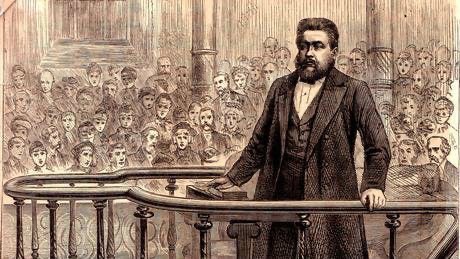





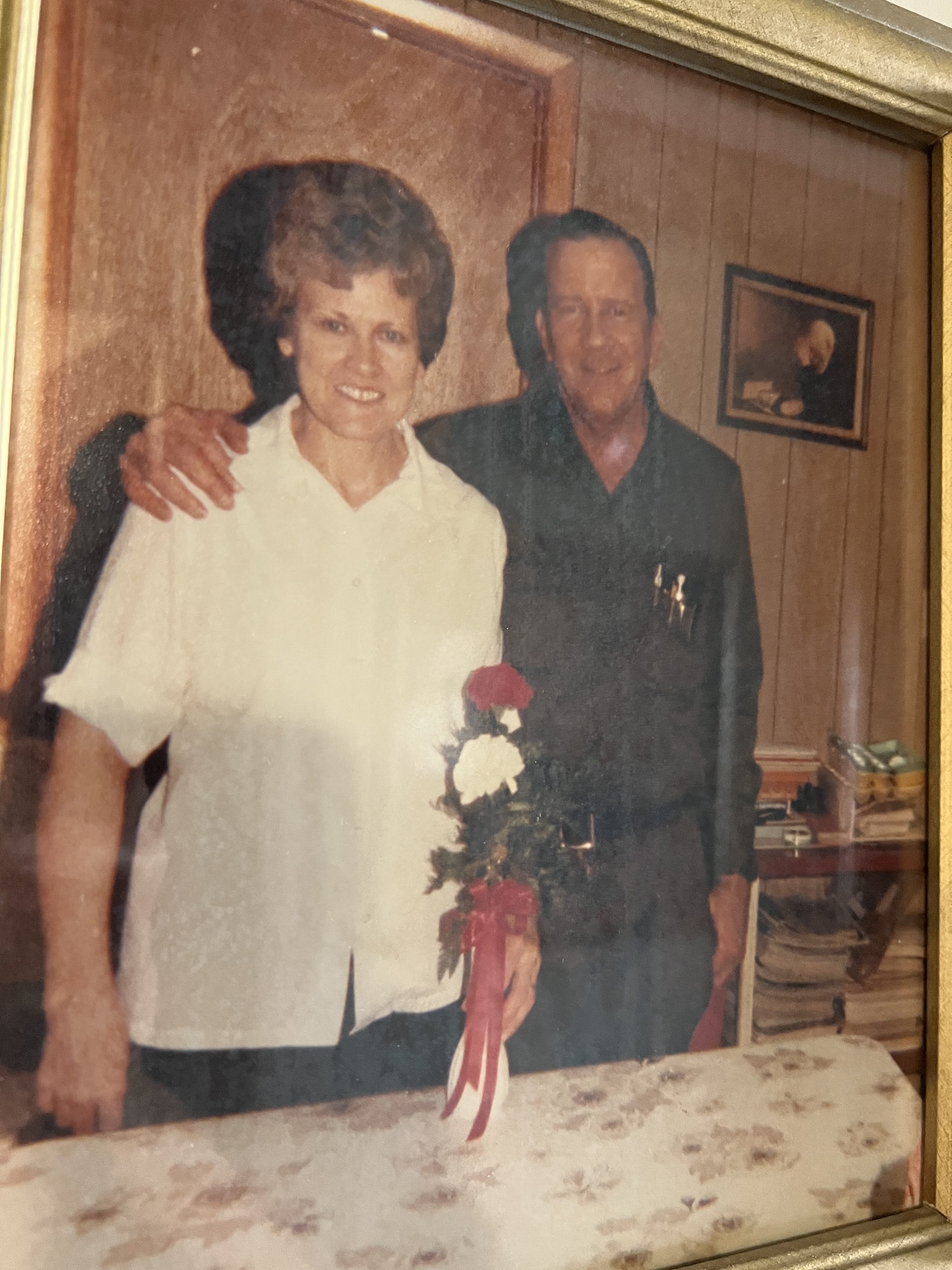


 Levi Deatrick
You must be logged in to post a comment.