

My family and I were visiting the Missouri History Museum in Forest Park a couple of months ago. There is some fascinating history regarding Mill Creek (the “Black Metropolis”) and its destruction in the 1960s for the sake of “Urban Renewal.” It also has a history of the World’s Fair in St. Louis in 1904 (Russia displayed a fur coat there made from the skins of about 10,000 Siberian Field Mice). However, my greatest take away from that day was actually something I found in the bookstore.
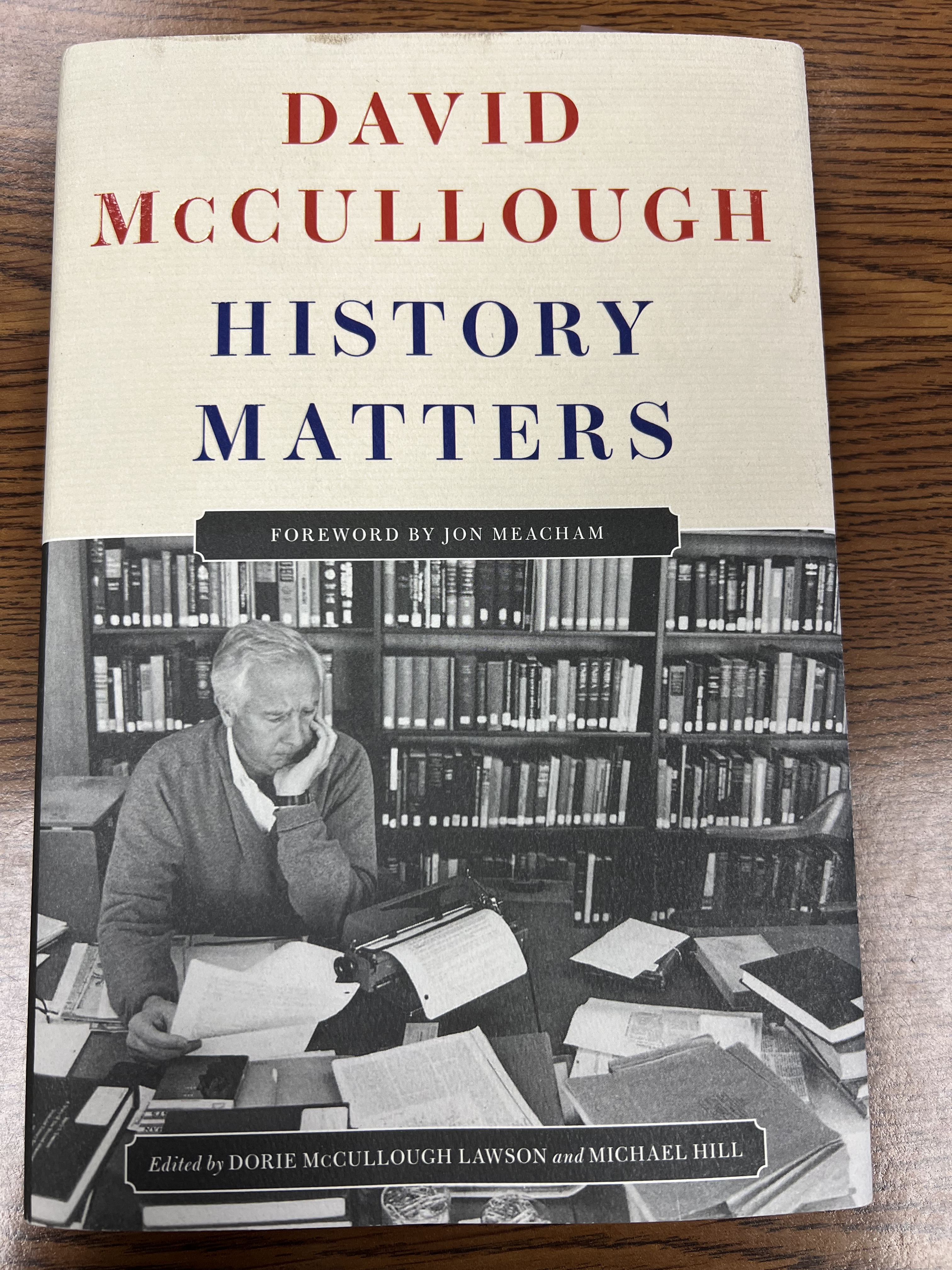
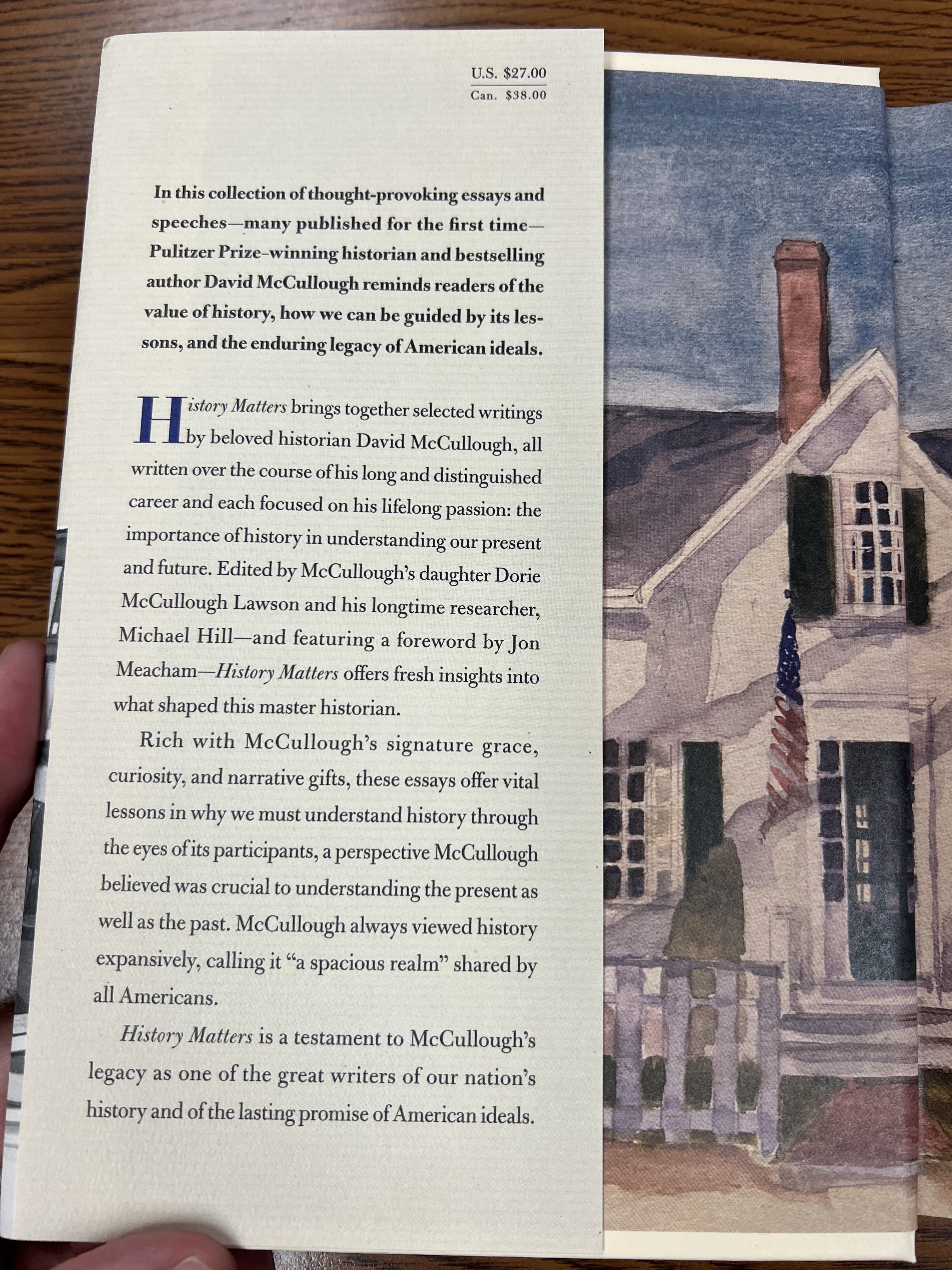
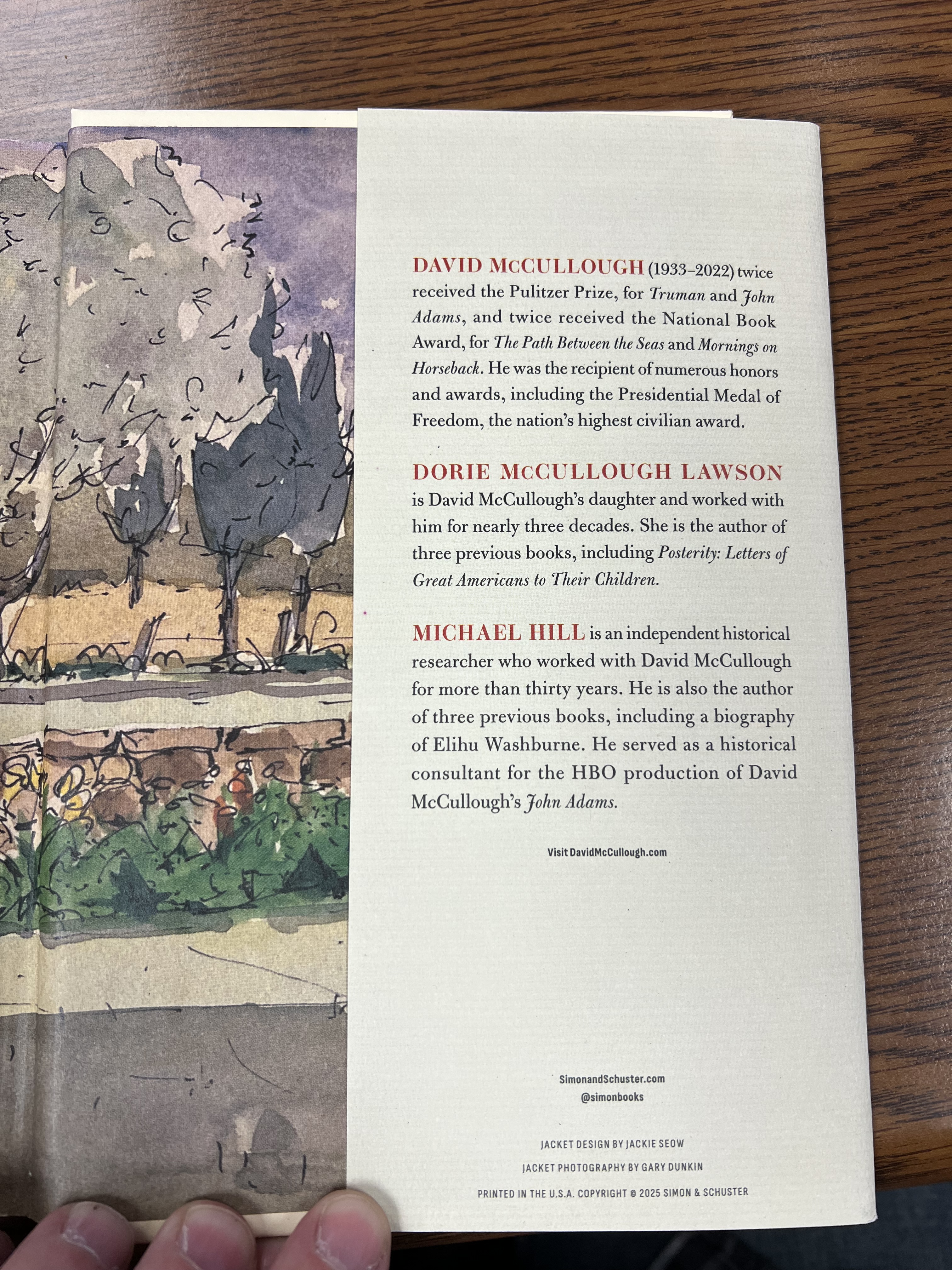
David McCullough died on August 7, 2022. I thought I had all of his books but was joyfully surprised when I saw the small book entitled “History Matters” by David McCullough in the museum gift shop. This book is a posthumous publication by McCullough’s daughter and research assistant. It is a collection of writings, speeches, and interviews regarding his own life – and it is good!
I’ve read McCullough’s books (several more than once) and his historical narratives are on par with Shelby Foote (the two of them are unmatched in my opinion). He is a master at immersing you into the reality of history. But this little book immerses you into the life of David McCullough himself. From now one, whenever I read a McCullough book, it will be colored by a better understanding of the author himself. His view of history is exemplary.
What is quoted here are remarks that McCullough made when he was awarded the Presidential Medal of Freedom. Forgive the long quote, but perhaps it will whet your appetite. The following sentences also express McCullough’s philosophy of history.
“History shows us how to behave. History teaches, reinforces what we believe in, what we stand for, and what we ought to be willing to stand up for. History is – or should be – the bedrock of patriotism, not the chest-pounding kind of patriotism but the real thing, love of country.
“At their core, the lessons of history are largely lessons in appreciation. Everything we have, all our great institutions, hospitals, universities, libraries, cities, our laws, our music, art, poetry, our freedoms, everything exists because somebody went before us and did the hard work, provided the creative energy, provided the money, provided the belief. Do we disregard that?
“Indifference to history isn’t just ignorant, it’s rude. It’s a form of ingratitude. (Emphasis mine.)
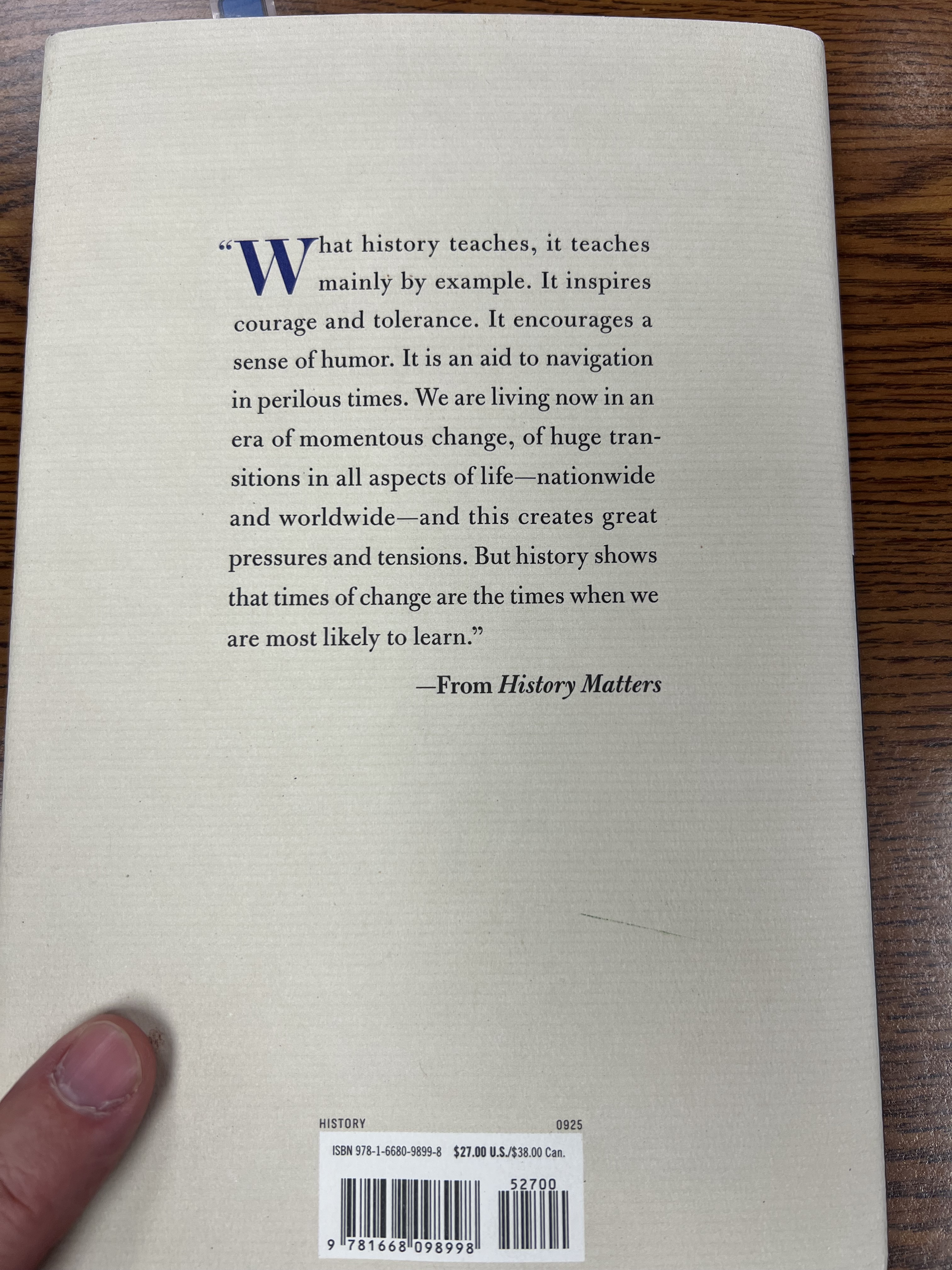
“What history teaches, it teaches mainly by example. It inspires courage and tolerance. It encourages a sense of humor. It is an aid to navigation in perilous times. We are living now in an era of momentous change, of huge transitions in all aspects of life – nationwide and worldwide – and this creates great pressures and tensions. But history shows that times of change are the times when we are most likely to learn. This nation was founded on change. We should embrace the possibilities in these exciting times and hold to a steady course, because we have a sense of navigation, a sense of what we’ve been through in times past and who we are.”
This book is relatively short by McCullough standards, only 169 pages. It is divided into 4 sections: 1) “Why History?” 2) “Figures In A Landscape.” 3) “Influences.” 4) “On Writing.”
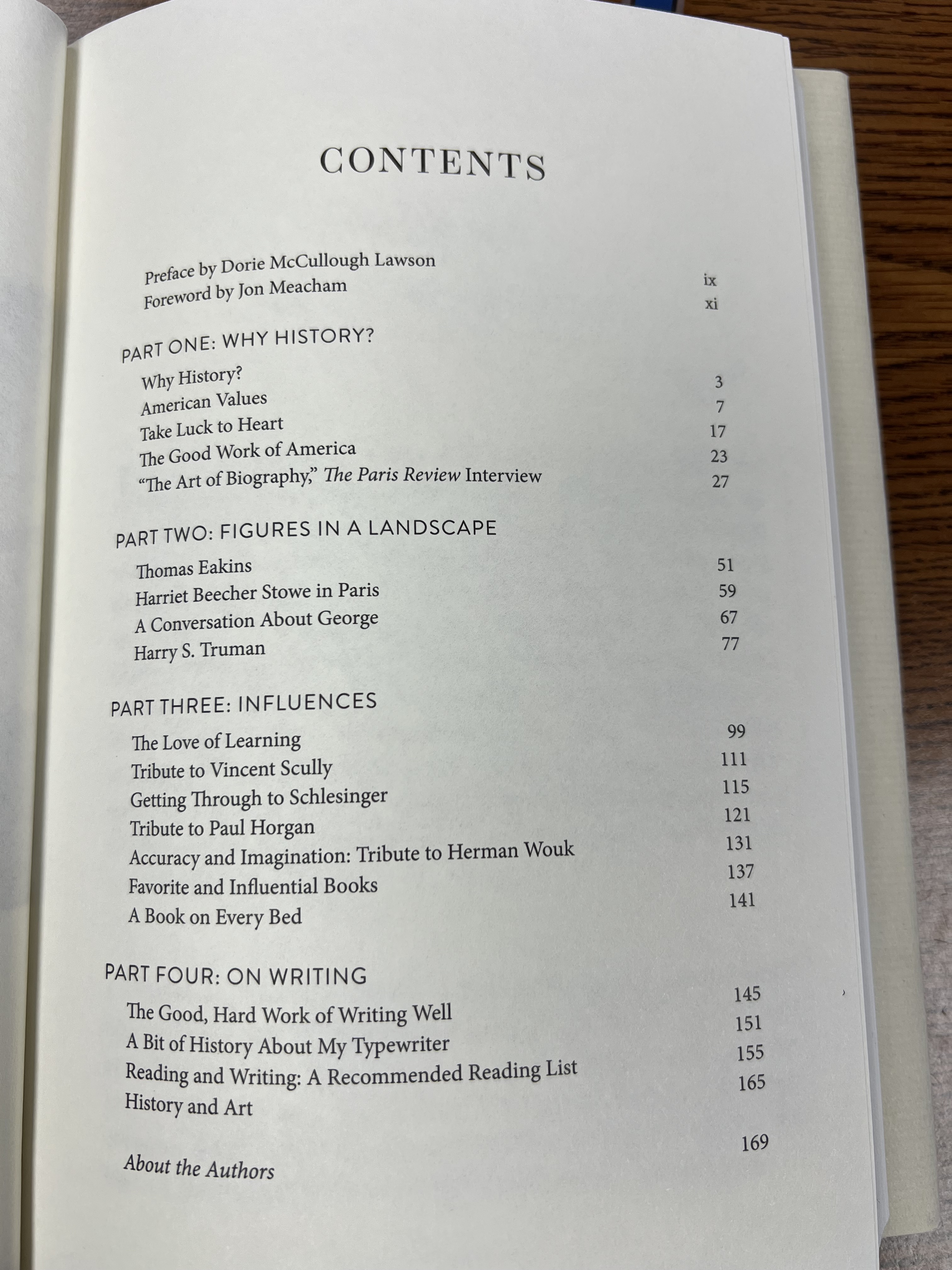
Part 1 expresses the value of history. Part 2 gives excerpts of four different historical figures and their impact on their time and culture. Part 3 is a list of tributes to people who influenced McCullough. In Part 4, McCullough gives personal tips on writing (this is worth the book itself).
Regarding writing, a few thoughts gleaned: 1) Enjoy it. 2) Research. 3) Read – and with variety. 4) Go to the place of which you’re writing. 5) Use your senses. 6) Write the kind of book you’d like to read. 7) Write every day. 8) Write on a subject you like, don’t write on subjects that don’t appeal to you. 9) Write to be heard, not just seen (especially in a day of audio books). 10) Reread what you have written.
My appreciation for David McCullough multiplied through reading this book. My understanding of my need for the knowledge of history was reiterated. My love for history grew exponentially in reading McCullough’s thoughts – these which were posthumously published by his daughter.
Filed under: Uncategorized | Tagged: book-review, books, history, reading | Leave a comment »
 Levi Deatrick
You must be logged in to post a comment.