

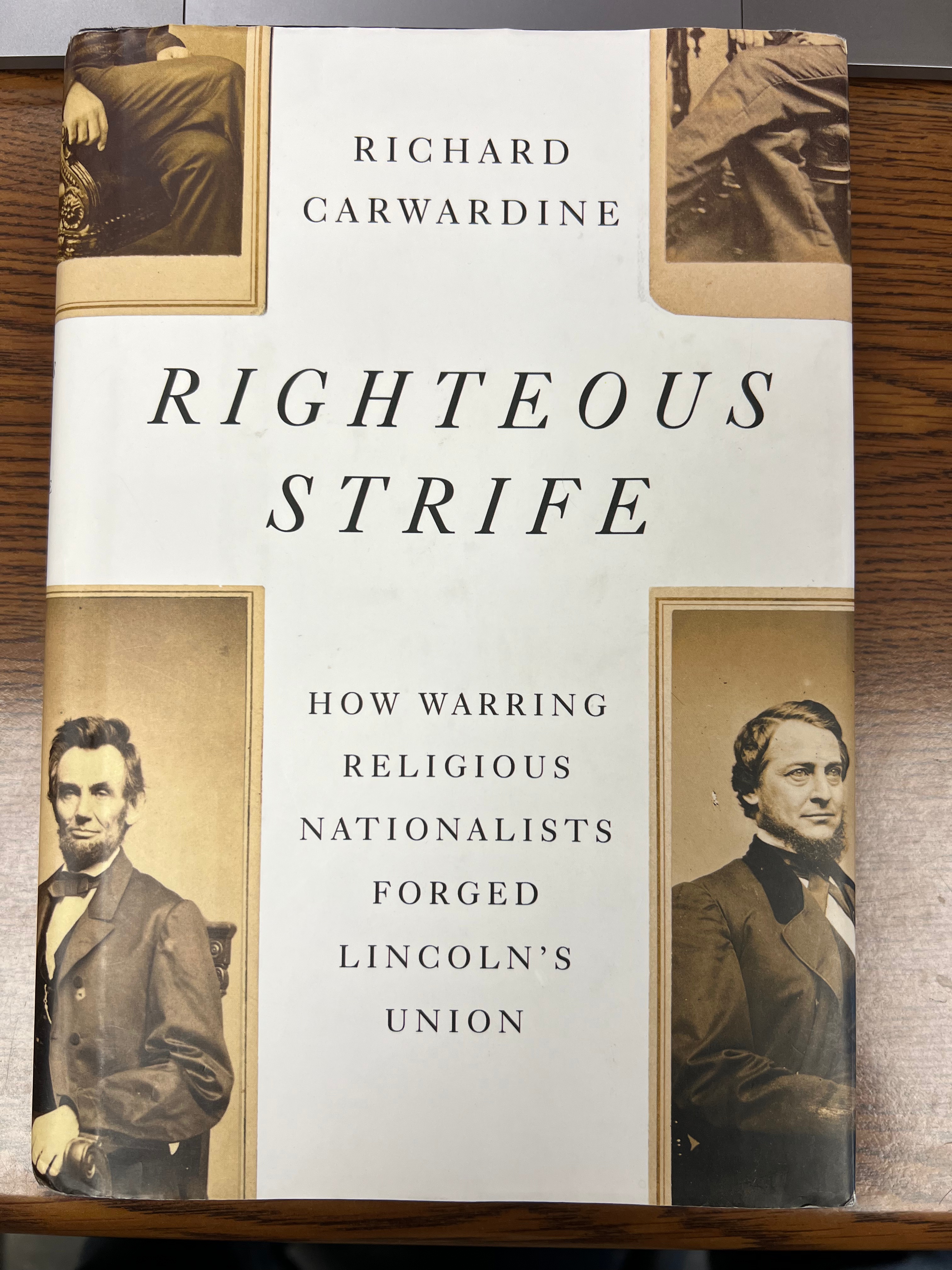
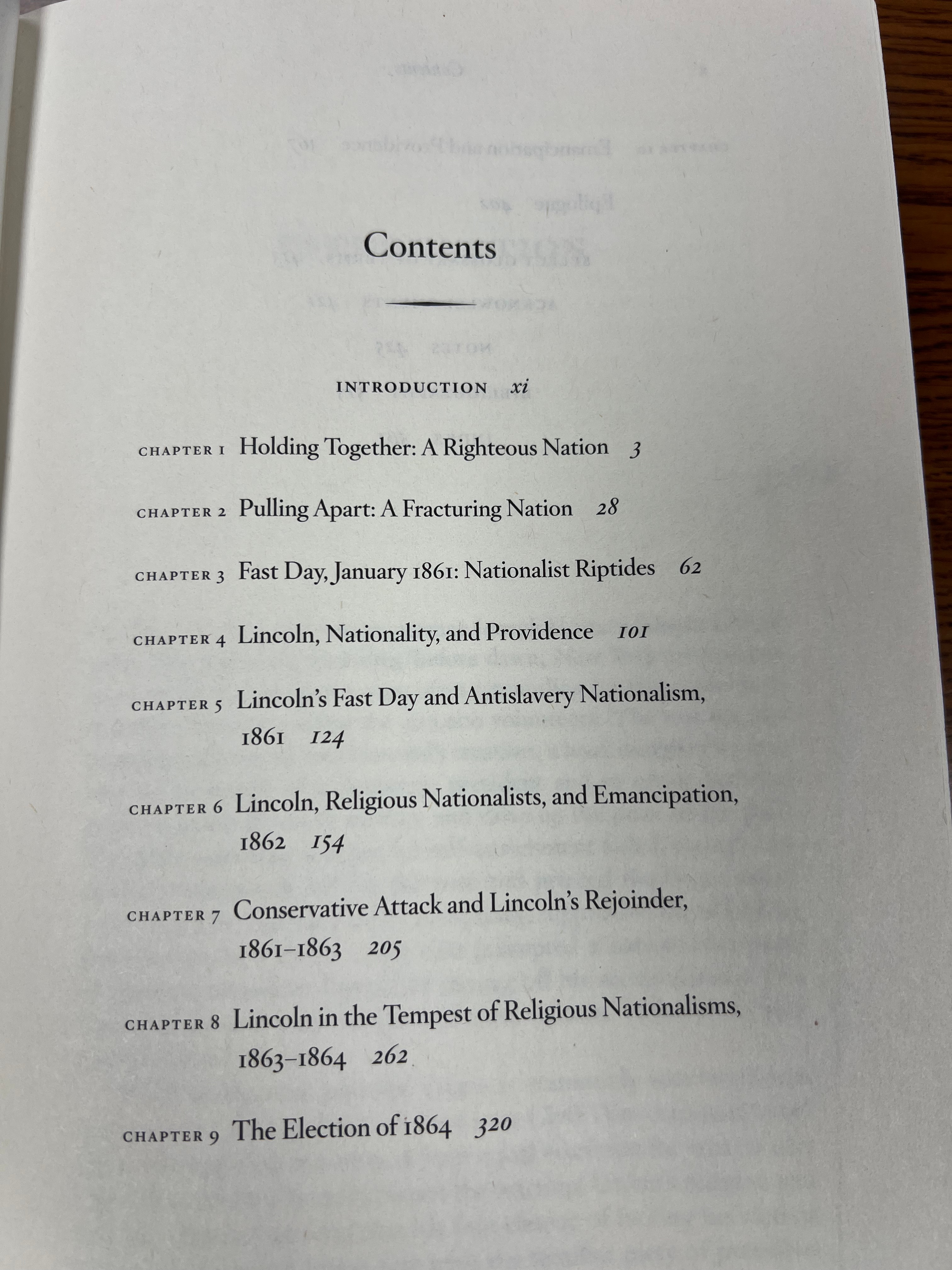
The author, Richard Carwardine, shows how there were different religious factions which sought to influence Lincoln’s decisions and directions relating to the Union and slavery. Specifically, Carwardine delineated the following (in his own words):
~ “Radical Religious Nationalists. Abolitionists, black and white, who from the outset saw the war as the opportunity and means of cleaning the nation of its most terrible sin. They included those inspired by a Christian vision of a redeemed post war nation founded on racial freedom and equality.”
~ “Antislavery Religious Nationalists. Those who before the war had subordinated their deep dislike of slavery to the political integrity of the Union and the interests of the South. They came – at varying speeds – to see and welcome the opportunity for wartime emancipation.”
~ “Conservative Religious Nationalists. Champions of an undying Union founded on the principles and compromise of 1787. As they saw it, the nation’s hope lay not in an unconstitutional emancipation agenda, to which the South would never yield, but rather in a return to the ‘Union as it was,’ on the rocks of the ‘Constitution as it is.'”
The book also brought back to the forefront of my mind things about Lincoln of which I had not thought on in years. We often hear of the Gettysburg address as well as some of his pithy quotes; however two other documents accentuate how deeply he was wrestling with the reality of God’s involvement and man’s participation in the great struggle.
After his death, a personal memorandum called “meditations on the divine will” was found among Lincoln’s papers. The date is uncertain, but it is presumed to have been written around the fall of 1862 and evidently was never intended for public dissemination. It therefore reflects his internal dialogue:
“The will of God prevails. In great contests each party claims to act in accordance with the will of God. Both may be, and one must be, wrong. God cannot be for and against the same thing at the same time. In the present civil war it is quite possible that God’s purpose is something different from the purpose of either party; and yet the human instrumentalities, working just as they do, are of the best adaptation to effect his purpose. I am almost ready to say that this is probably true; that God wills this contest, and wills that it shall not end yet. By his mere quiet power on the minds of the now contestants, he could have either saved or destroyed the Union without a human contest. Yet the contest began. And, having begun, he could give the final victory to either side any day. Yet the contest proceeds.”
Later on, even when the war was almost at an end (and a victory proclamation could be only a few weeks away), part of the text of the 2nd inaugural address (March 4, 1865) continues to reflect his questions about the will of God and man’s responsibility.
“Both read the same Bible and pray to the same God, and each invokes His aid against the other. It may seem strange that any men should dare to ask a just God’s assistance in wringing their bread from the sweat of other men’s faces, but let us judge not, that we be not judged. The prayers of both could not be answered. That of neither has been answered fully. The Almighty has His own purposes. ‘Woe unto the world because of offenses; for it must needs be that offenses come, but woe to that man by whom the offense cometh.’ If we shall suppose that American slavery is one of those offenses which, in the providence of God, must needs come, but which, having continued through His appointed time, He now wills to remove, and that He gives to both North and South this terrible war as the woe due to those by whom the offense came, shall we discern therein any departure from those divine attributes which the believers in a living God always ascribe to Him? Fondly do we hope, fervently do we pray, that this mighty scourge of war may speedily pass away. Yet, if God wills that it continue until all the wealth piled by the bondsman’s two hundred and fifty years of unrequited toil shall be sunk, and until every drop of blood drawn with the lash shall be paid by another drawn with the sword, as was said three thousand years ago, so still it must be said ‘the judgments of the Lord are true and righteous altogether.’
With malice toward none, with charity for all, with firmness in the right as God gives us to see the right, let us strive on to finish the work we are in, to bind up the nation’s wounds, to care for him who shall have borne the battle and for his widow and his orphan, to do all which may achieve and cherish a just and lasting peace among ourselves and with all nations.“
I make no assumptions about the relationship of Abraham Lincoln with God through Jesus Christ. There is scant and insufficient evidence for any certainty of a personal relationship with Jesus Christ (and the purported evidence is untrustworthy). What is clear to me is that, though he was pressured by several different religious nationalists factions, Lincoln did not fit neatly into any of their boxes. He recognized himself as having finite understanding while acknowledging the infinite mind, will, and purposes of Almighty God. He did not view himself as a savior, but simply as one living in the divine will.
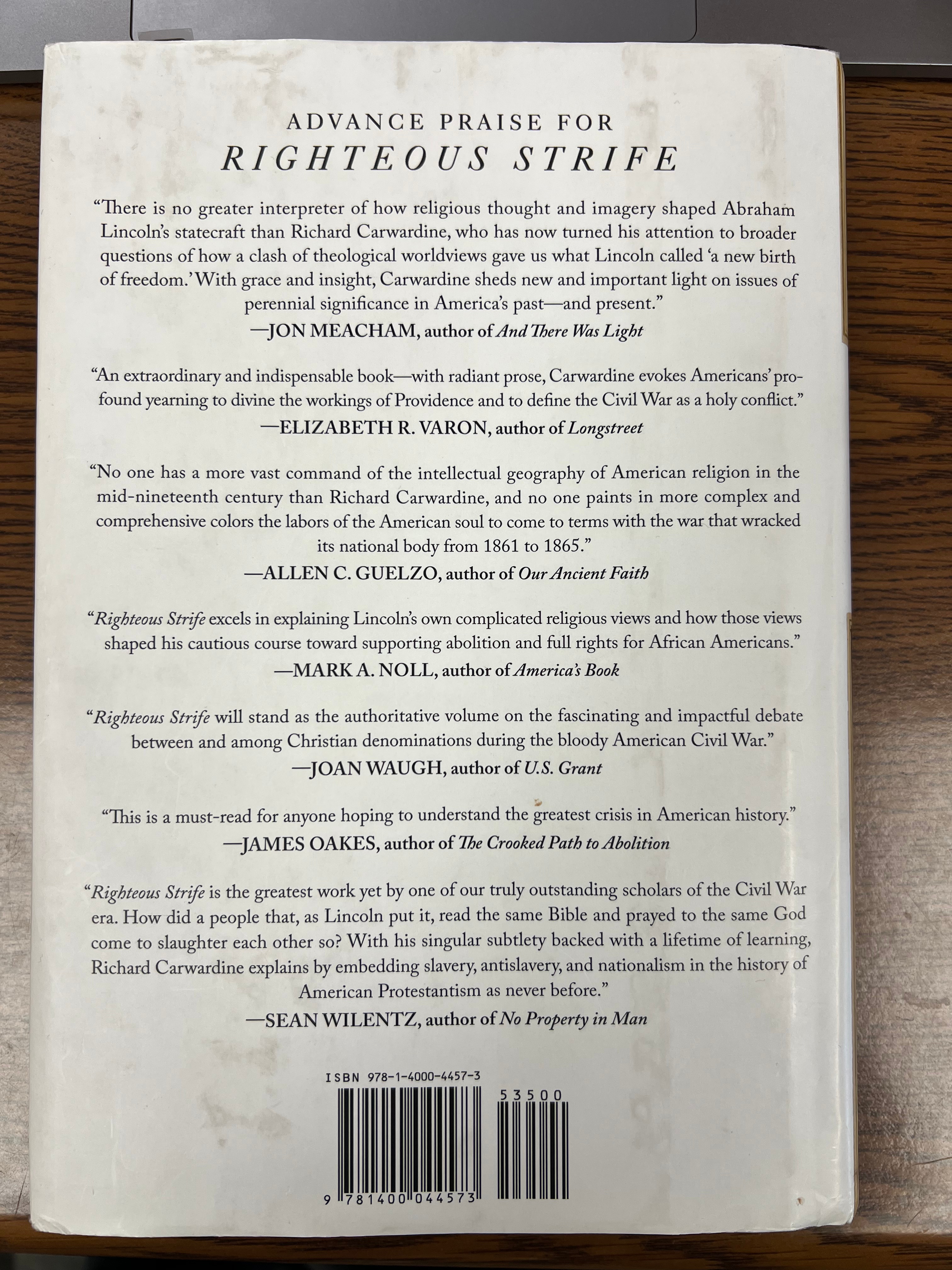
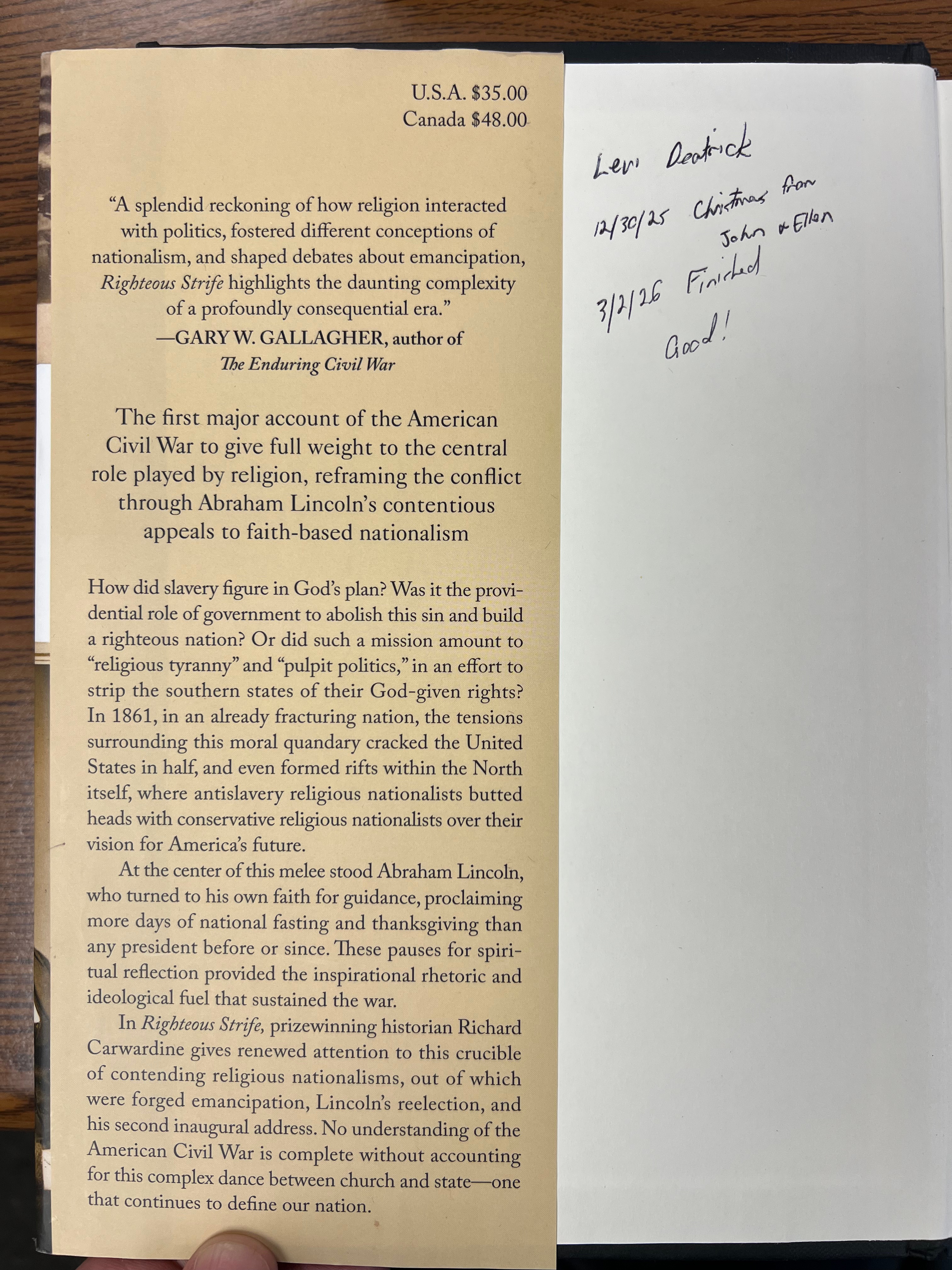
Carwardine’s book, Righteous Strife, is a good addition to anyone’s library who is interested in Lincoln’s spiritual life. It also contributes to the meditations of those who in their finite minds still grapple with the infinite mind of God.
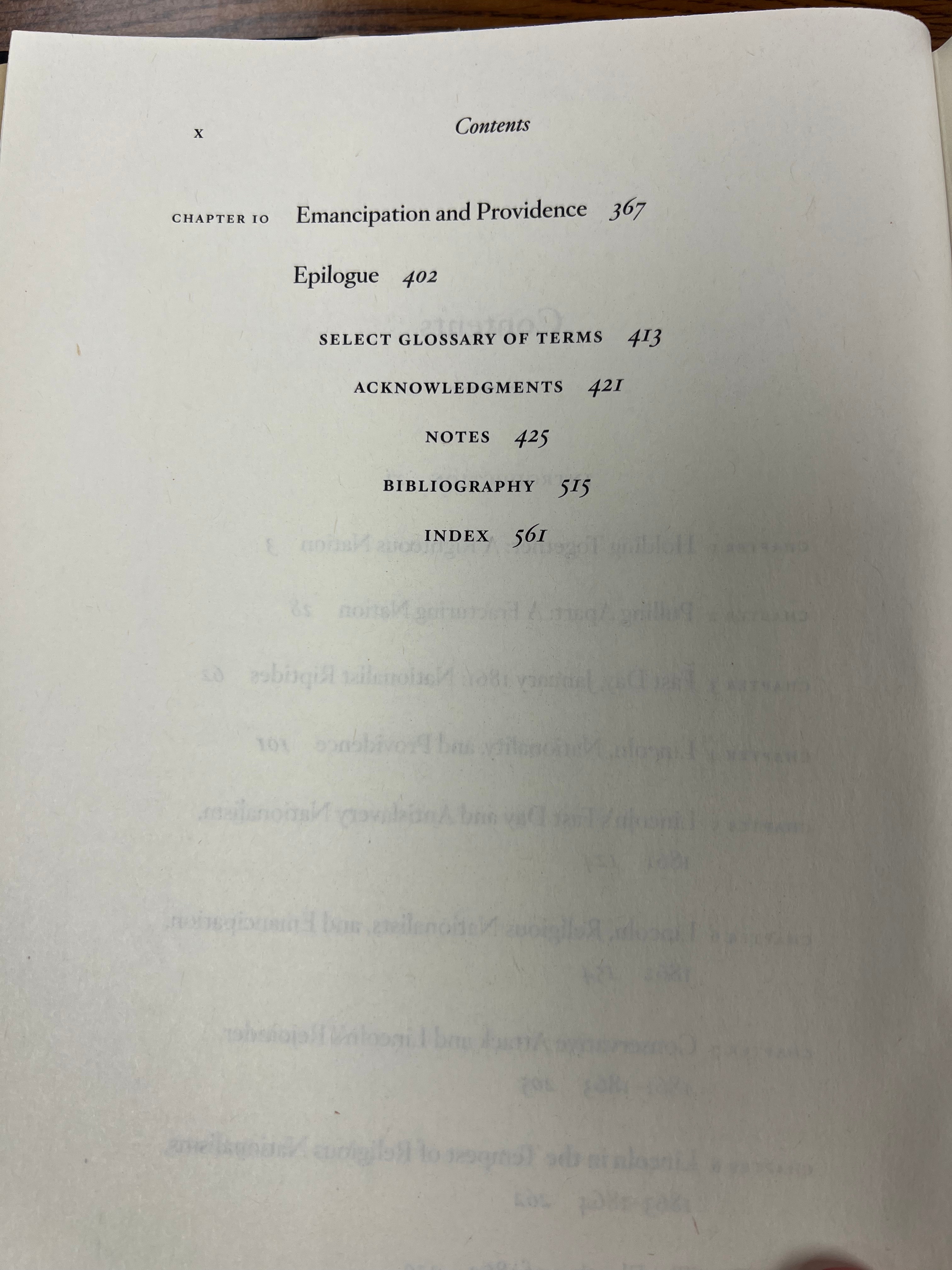
A couple of other notes about Righteous Strife: 1) I’m not sure I agree with some of the connections that the author makes in the epilogue regarding the religious factions of the Civil War era and today’s religious nationalists. 2) His glossary of terms in the back is excellent. It contains in paragraph form, many religious and political terms from the Civil War context.
Filed under: Uncategorized | Comments Off on Book Review on “Righteous Strife.”
 Levi Deatrick
You must be logged in to post a comment.